

Financial Services Portfolio: Filings, Ledgers, and Books Done Right
This financial services portfolio is built around the paperwork that actually decides whether a business sleeps well at month end: GST returns, income tax filings, MCA compliance, and books that reconcile down to the rupee. No slide decks here, just the documents themselves.
Compliance work rarely gets a highlight reel, mostly because it is not supposed to be exciting. It is supposed to be correct, on time, and boring in the best possible way. That is the standard every record on this page was held to.

What Sits Behind Every Page in This Financial Services Portfolio
A GST return either matches the books or it does not. An ITR acknowledgment either shows a filing within the deadline or it does not. There is very little room for interpretation in this line of work, and this financial services portfolio is written the same way: plainly, with the actual paperwork doing most of the talking.
Each section below covers one part of the compliance calendar a growing Indian business has to manage, from monthly GST filings to annual ROC returns to the books that tie every number together. Nothing here is dressed up. Financial work does not need a highlight reel, it needs to be correct, and that is what this page is trying to show.
This is one part of a broader set of financial advisory work, alongside payroll compliance, virtual CFO support, and audit coordination, all covered on our services page in more detail. What sits below is the part most businesses ask about first.
GST Return Filing Results
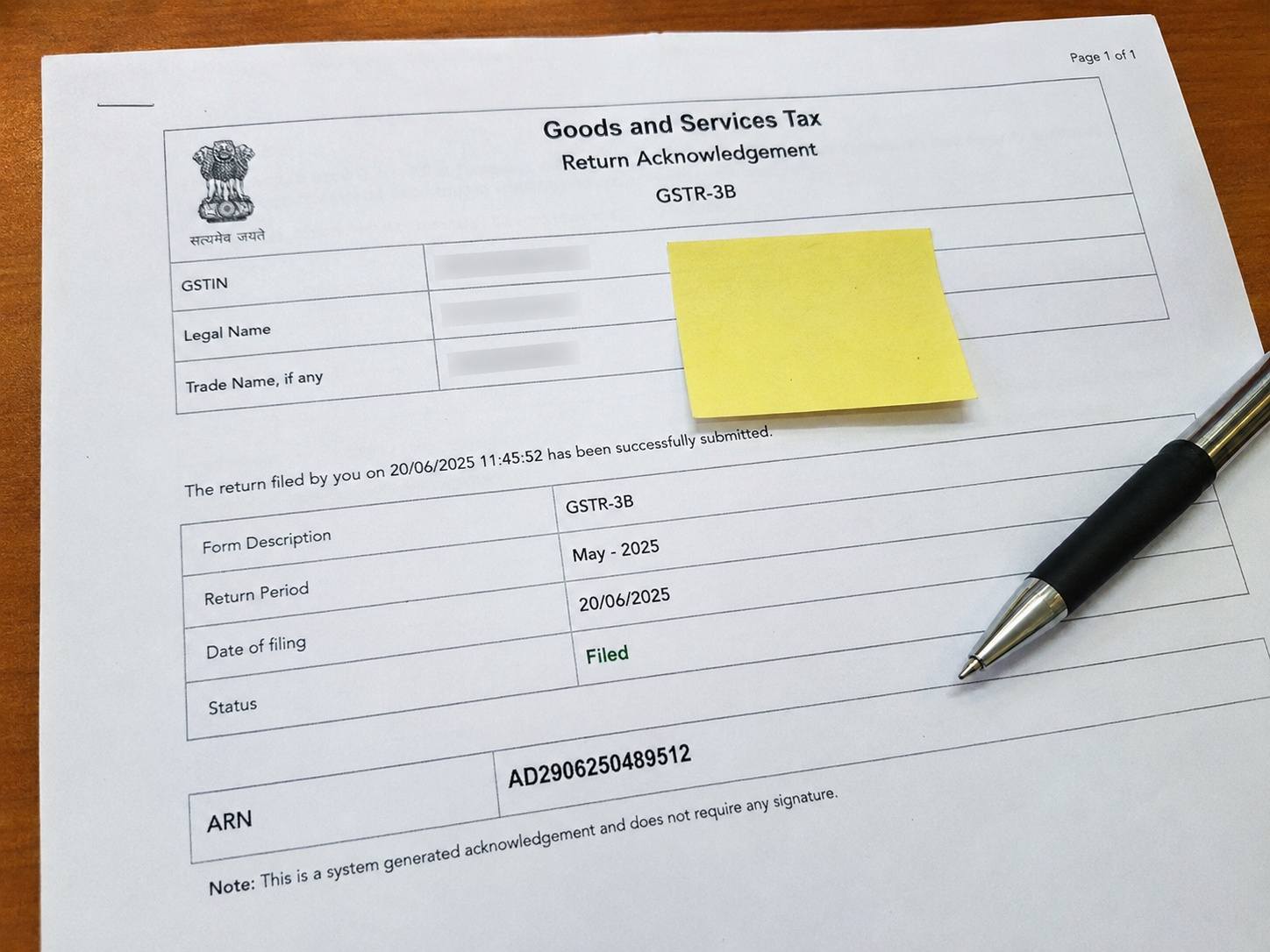
GST is unforgiving about deadlines and even less forgiving about mismatches between GSTR-1 and GSTR-3B. These GST return filing results reflect returns filed on schedule, reconciled against purchase and sales registers before submission, not adjusted after the fact.
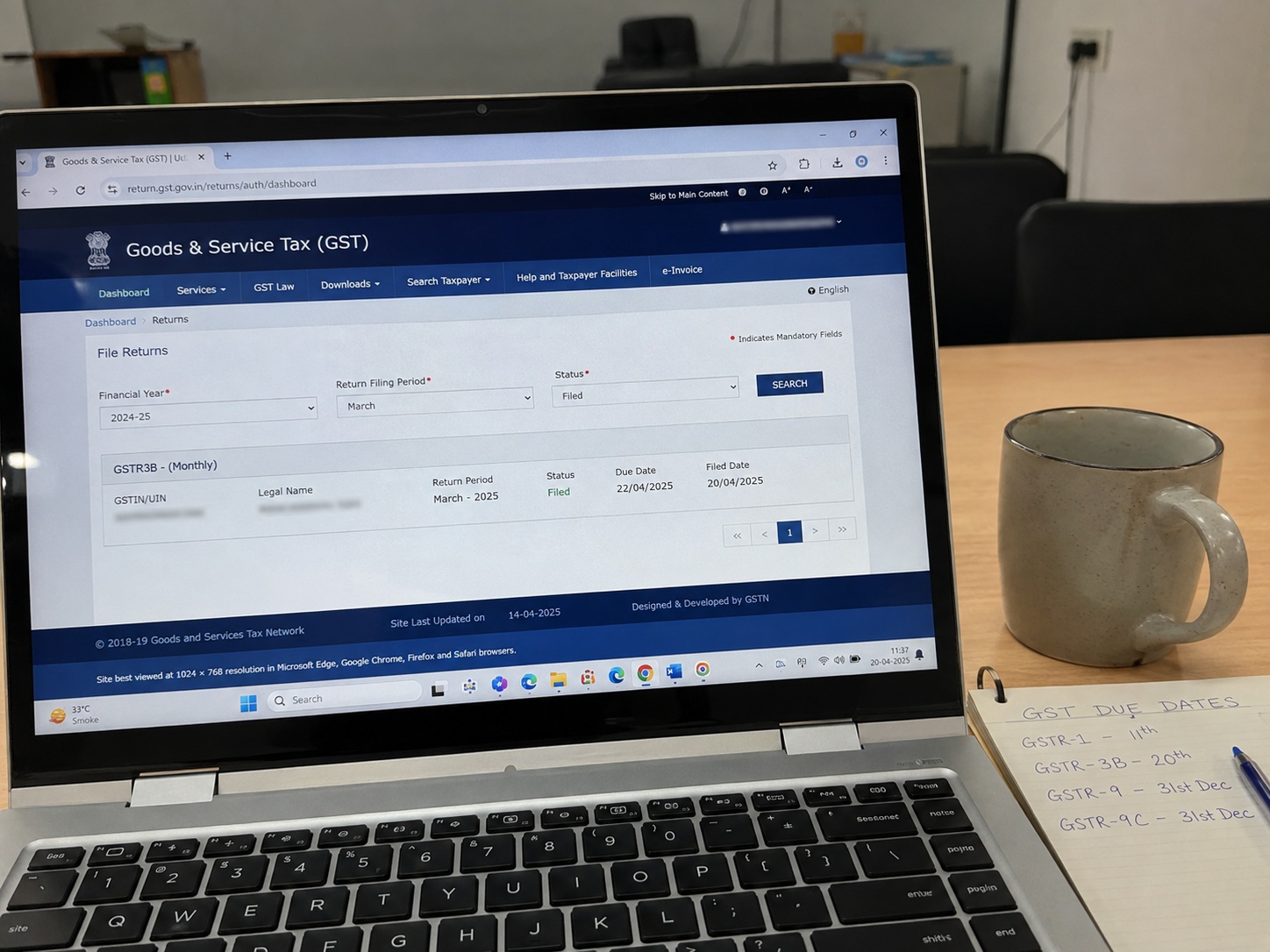
Every return is filed directly through the Government of India’s GST portal, in the same acknowledgment format shown below, and cross-checked against GSTR-2B before the input tax credit figure ever gets locked in.
Twenty-four consecutive on-time filings
A mid-sized manufacturer had two late filings and a notice for mismatched input tax credit in the year before we took over. Since then, every GSTR-1 and GSTR-3B has gone in before the due date, with reconciliation done against the purchase register a full week ahead each month.
ITC mismatch brought to zero
Input tax credit claimed on the books did not match GSTR-2B for several months running, largely because of vendors filing late on their own end. A monthly vendor reconciliation process closed that gap and has kept it closed for the last four quarters.
The GST Calendar Behind These Results
GSTR-1 is due on the eleventh of the following month for most regular filers, and GSTR-3B follows a few days after, though composition and QRMP scheme dealers work to a different rhythm. Every client account carries its own version of this calendar, built around whichever scheme actually applies to that business.
The reconciliation step is what actually prevents a mismatch, not the filing itself. Purchase and sales registers get checked against GSTR-2B before a single figure goes into the return, which is slower than filing straight from the books but avoids the far slower process of correcting a notice later.
Income Tax Filing Results
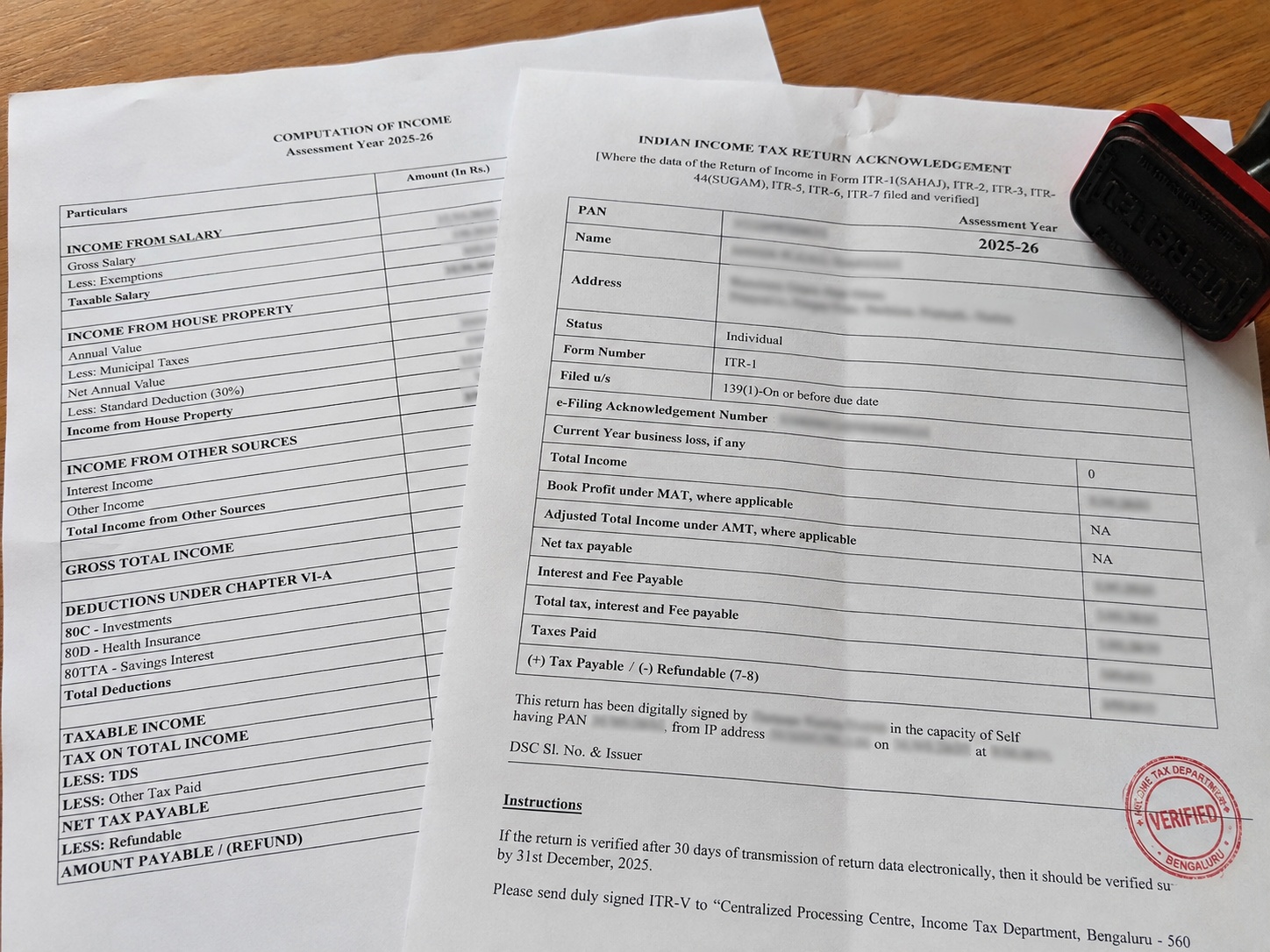
Income tax filing results matter most in the months a business is not thinking about them, which is exactly when a missed advance tax instalment or an unclaimed deduction quietly costs money. These records reflect returns filed with computation sheets that were reviewed, not rushed, before submission.
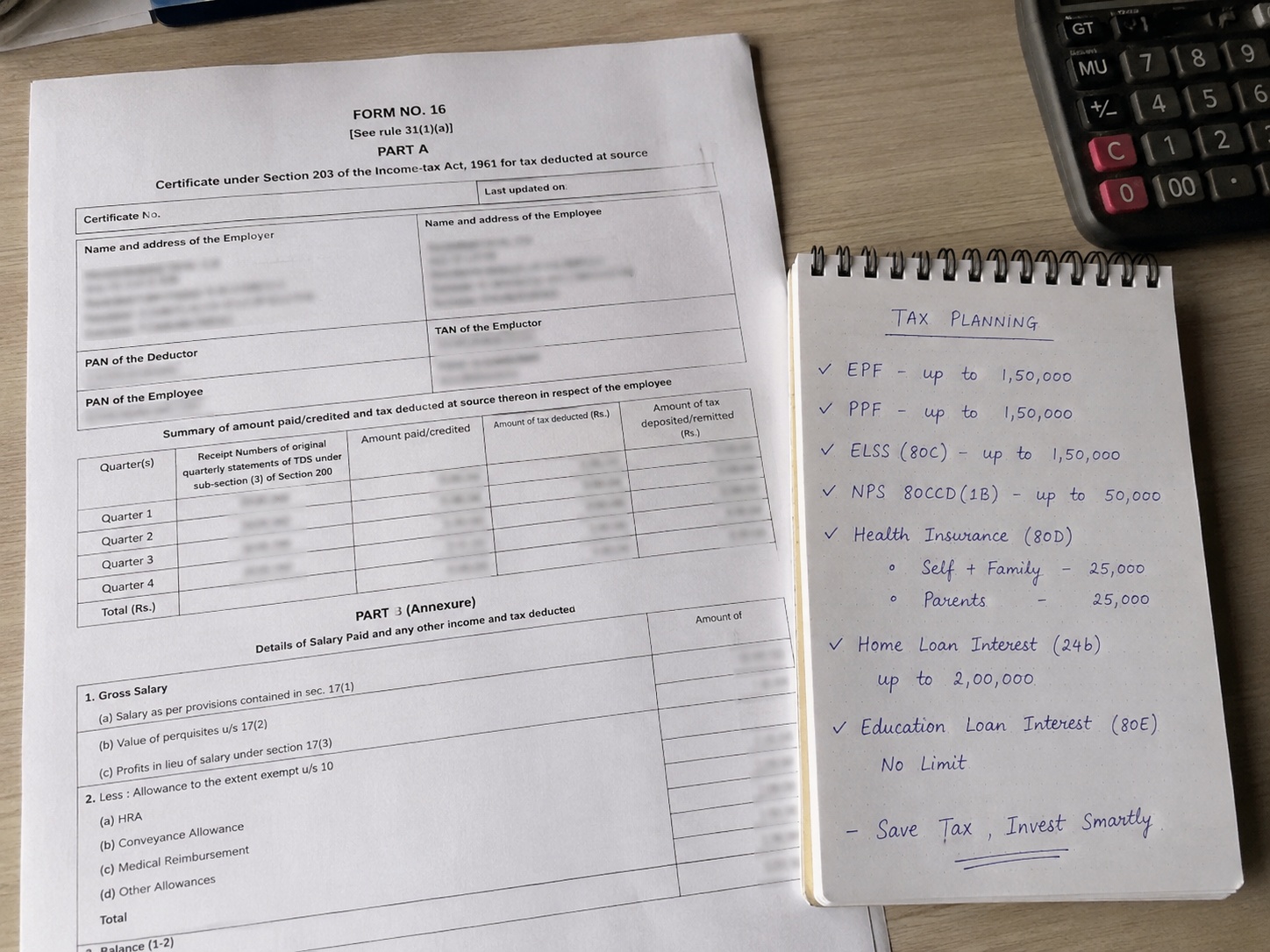
Filings go through the Income Tax Department’s e-filing portal, with the computation sheet checked line by line against the books before the return ever gets submitted, so the acknowledgment reflects a number that was actually verified rather than estimated under time pressure.
Two years of pending returns closed out
A founder busy with fundraising had let two assessment years slip without filing. Both returns were filed with proper computation, no penalty proceedings followed, and a recurring reminder calendar now keeps every future due date well ahead of the deadline.
Advance tax instalments aligned to actual income
Advance tax had been paid on rough estimates for years, leading to either a large final payment or an unnecessary refund claim. Quarterly income projections now keep each instalment closer to the actual liability, with no interest under Section 234C in the last two years.
Where Most Tax Planning Actually Gets Missed
The biggest gap we see is not aggressive tax avoidance, it is the opposite: eligible deductions left unclaimed because nobody tracked them through the year. Section 80C investments, depreciation schedules, and business expense categorization all get reviewed well before the filing deadline, not reconstructed from memory in March.
A tax return prepared under deadline pressure tends to take the safest, most conservative path on every ambiguous line item, which usually means paying more than necessary. Planning earlier in the year removes that pressure and lets each deduction get claimed with proper documentation behind it.
MCA and ROC Compliance Records
Annual ROC filings are the paperwork founders forget exists until a bank or an investor asks for it. These MCA and ROC compliance records cover the annual returns, board resolutions, and statutory registers that keep a company in good standing with the Registrar of Companies.
Filings are submitted through the Ministry of Corporate Affairs portal, and the underlying registers, minutes, and resolutions are kept current through the year rather than reconstructed retroactively when a filing deadline appears on the calendar.

Annual filing set, private limited company, Pune. AOC-4 and MGT-7 filed within the statutory window, with board resolutions and registers kept current throughout the year rather than reconstructed at filing time.
A private limited company carries obligations that a proprietorship or partnership does not: annual returns, statutory registers, board meeting minutes, and event-based filings whenever a director changes or share capital moves. Missing one of these rarely causes an immediate problem, which is exactly why it tends to pile up quietly until a due diligence process or a loan application surfaces it all at once.
Keeping this current is less about any single filing and more about a habit: minutes drafted the same week a board meeting happens, registers updated the same month a change occurs, rather than reconstructed from memory a year later.
Bookkeeping and Financial Statements Portfolio
Every GST return and tax filing above sits on top of books that have to be right first. This bookkeeping and financial statements portfolio covers the trial balance, ledgers, and final statements that make every filing above possible in the first place.
A trial balance that does not tie out is not a small issue to be smoothed over before a filing deadline, it is a sign that something upstream in the ledgers needs attention. Every set of books shown here goes through that same standard before anything gets called final.
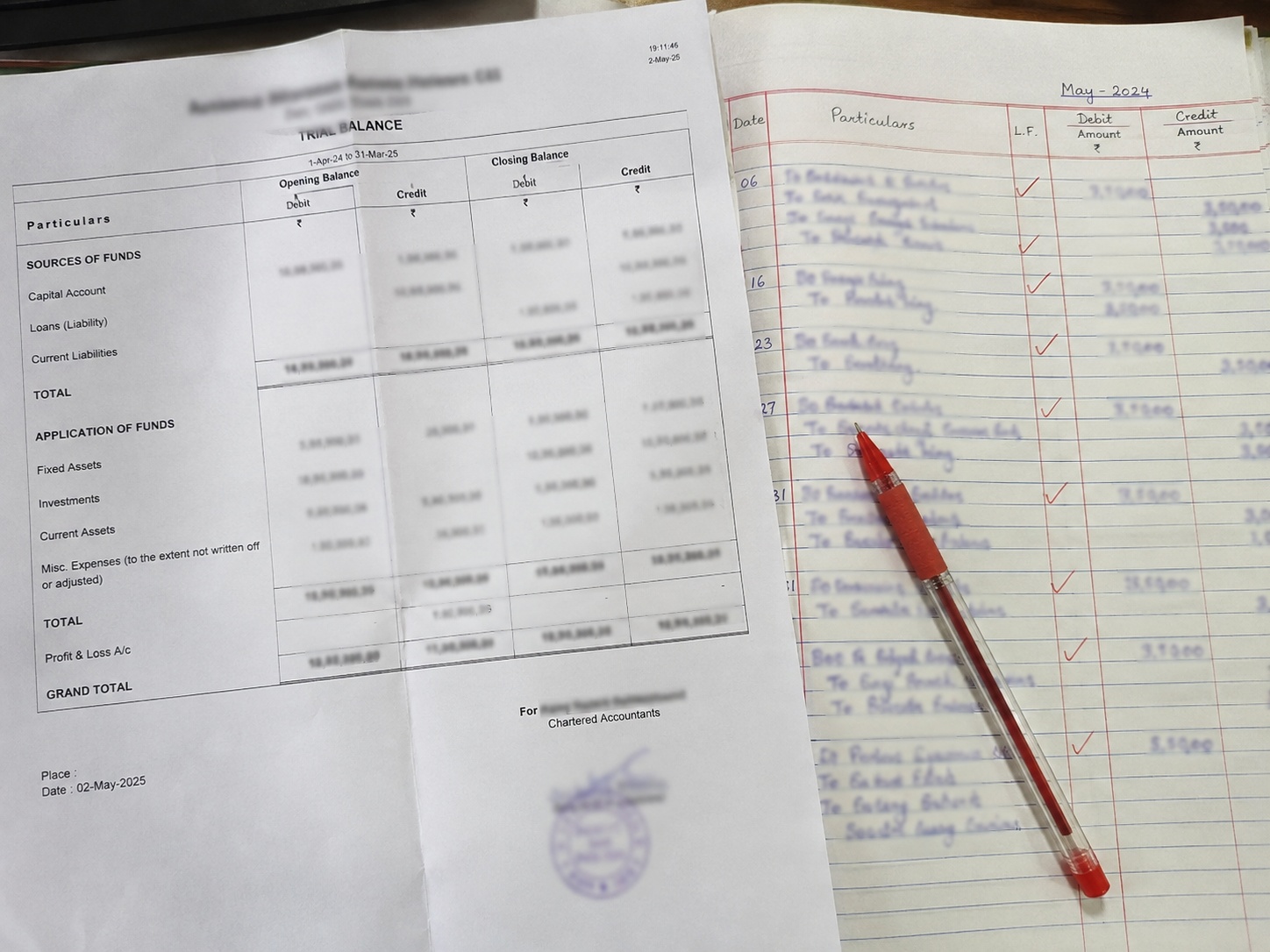
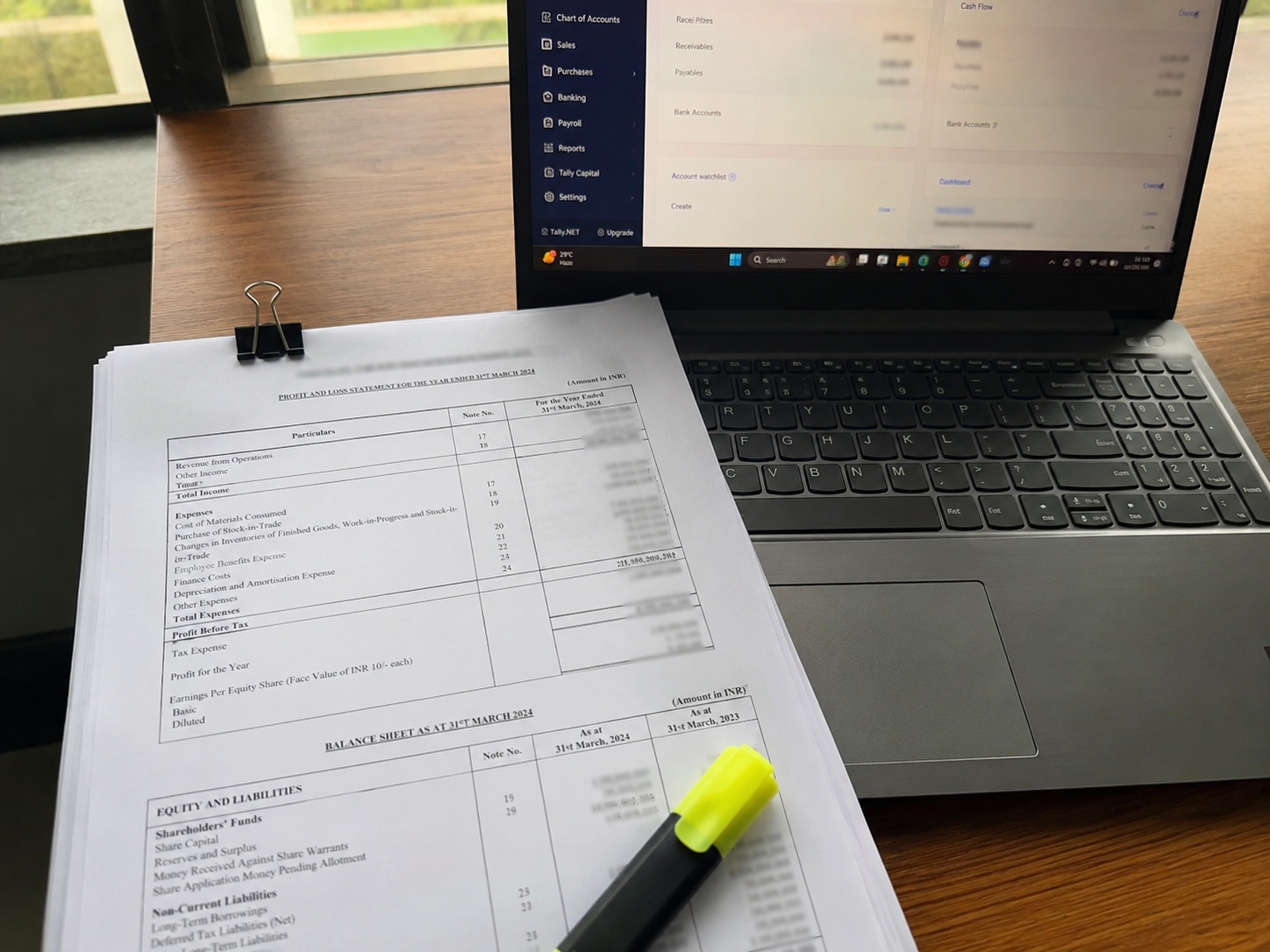
Fifteen-day close brought down to three
Monthly closing used to take close to fifteen days, with the trial balance rarely tying out on the first attempt. A structured chart of accounts and daily reconciliation now brings the close down to three working days, with a clean trial balance most months on the first pass.
Cash and bank reconciled to the rupee
Petty cash and bank balances had drifted apart from the books by a meaningful amount over two years of informal tracking. A full reconstruction and a weekly reconciliation habit brought every account back in line, with zero unexplained variance since.
Days to close the books, industrial distributor, Ahmedabad
On-time GST filings, manufacturing client, Ahmedabad
Late fees or penalties, active retainer clients, trailing year
ROC filings completed within the statutory window
The Compliance Calendar Behind a Financial Services Portfolio Like This
Every business on this page is working against the same broad calendar, just at a different scale. GST returns fall monthly or quarterly depending on the scheme. TDS deposits and returns fall quarterly. Advance tax falls four times a year. ROC annual filings fall once, typically within a fixed window after the financial year closes.
None of these deadlines move for a bad month or a distracted founder. What changes engagement to engagement is how much buffer sits in front of each one. A business that reconciles weekly walks into a GST due date with the return essentially ready. A business that reconciles once a quarter is usually still catching up on the twelfth of the following month.
TDS deserves a specific mention here, since it tends to get treated as an afterthought behind GST and income tax. Quarterly TDS returns, correct deduction rates across vendor and salary payments, and timely deposit all carry their own penalty structure, and a business that has GST and income tax under control can still be exposed if TDS is being handled informally.
The records shown across this page belong to businesses in the first category, not because the compliance requirement was different, but because the rhythm behind it was.
How Every Filing in This Financial Services Portfolio Gets Verified
Nothing above goes out the door on a single pass. Every return, statement, and filing moves through the same three checks before it is considered final, regardless of which client or which financial year it belongs to. The process does not get shortened for a smaller client or a tighter deadline.
Books before returns
No GST return or income tax filing is prepared until the underlying books for that period tie out. A return built on unreconciled books just moves the problem forward.
A second reviewer, always
Every filing is checked by someone other than the person who prepared it. This catches the kind of small transposition error that is invisible to whoever typed the number in the first place.
A due-date calendar, not a memory
GST, TDS, advance tax, and ROC deadlines all sit on a shared calendar with built-in buffer days, so a filing is never a last-minute scramble against the clock.
Who This Financial Services Portfolio Actually Serves
Most of the work behind this page belongs to businesses that outgrew a part-time bookkeeper or a single overworked accountant, somewhere between ten and two hundred employees, across manufacturing, retail, healthcare, professional services, and early-stage technology.
A few came to us mid-crisis, with notices, overdue filings, or books that had not been touched in months. Most came earlier than that, usually right after a founder realized they were personally chasing GST due dates between everything else they were supposed to be doing. Either starting point ends up in the same place: a system that runs on a calendar instead of a scramble.
Neither starting point is unusual. Most businesses grow faster than their back office does, and the gap only becomes visible once a bank, an investor, or a tax notice asks for something the founder assumed was already in order.
A large share of this work is done for businesses that never meet us in person, coordinated the same way for a client in Ahmedabad, Pune, or a state neither of us has visited, since GST, income tax, and MCA rules apply the same way regardless of where the business happens to sit.
The team behind this financial services portfolio is the same team you can read about on our about us page, structured so financial advisory work stays coordinated with whatever else a client has running with us, rather than sitting in a separate silo with its own separate context.
Questions About This Financial Services Portfolio
Why are the names and numbers on these documents blurred?
Financial records carry PAN numbers, GSTINs, and figures that belong to the client, not to us, and we treat that the same way any accountant or chartered accountant is expected to under standard client confidentiality practice. Showing the actual document format matters for this page. Showing someone else’s tax details does not, so we blur what identifies the business and keep what shows the work.
How long does it usually take to bring overdue GST or income tax filings current?
A straightforward backlog of a few months can usually be cleared within two to three weeks once books are reconciled. A longer gap, spanning a full financial year or more, typically takes six to eight weeks, since each period has to be reconstructed and reviewed on its own before filing. Interest and late fees already accrued cannot be undone, but further penalty exposure stops the moment filings are current.
Do you only work with GST-registered businesses, or also unregistered ones approaching the threshold?
Both. Several engagements start before GST registration is even required, setting up bookkeeping early enough that the eventual registration and first return are not a scramble. Registration itself is handled as part of that setup when the threshold is reached, along with the composition scheme evaluation where it genuinely fits the business better than regular GST.
What software do you use for bookkeeping and filings?
Most engagements run on Zoho Books or Tally, chosen based on what fits the client’s existing workflow, connected wherever possible to the bank feed so reconciliation happens closer to daily than monthly. Migration from spreadsheets or an older desktop system is handled as part of onboarding rather than treated as a separate project.
Is this financial services portfolio limited to GST and income tax, or does it include audit support too?
It extends to statutory audit coordination, TDS compliance, payroll-linked statutory dues, and virtual CFO style financial planning as well. GST, income tax, MCA compliance, and bookkeeping form the core of what is shown here because they touch nearly every engagement, regardless of what else is included. A business that needs only one of these can start there, without being pushed into a broader retainer before it makes sense.
Find Out Where Your Own Filings Actually Stand
Every record in this financial services portfolio started with an honest look at the books, not a sales pitch. A free strategy call is the fastest way to find out whether your GST, income tax, MCA, or bookkeeping is in the shape you assume it is.
There is no cost and no obligation attached to the call, and no pressure to sign anything at the end of it.
