


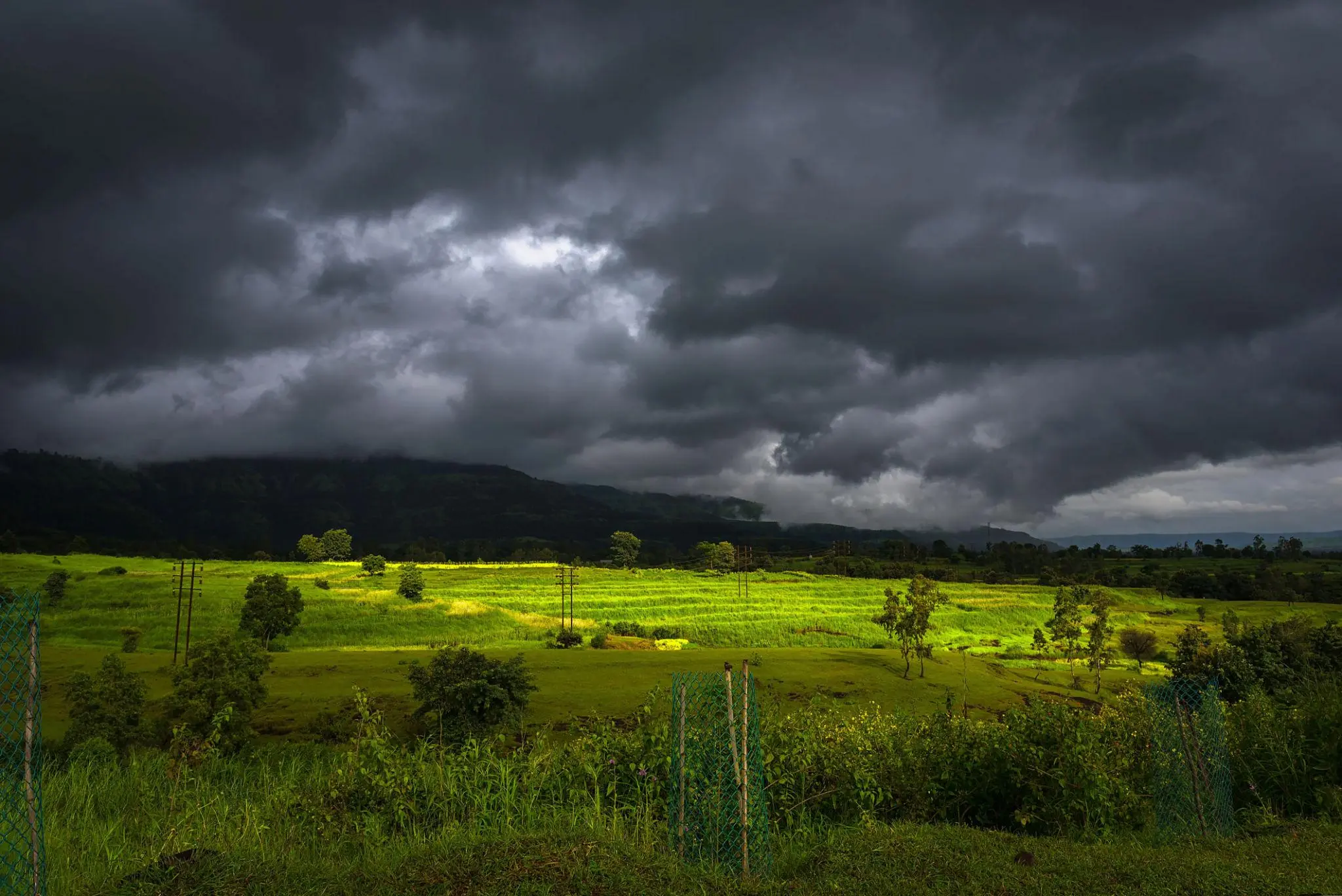
The India Meteorological Department has forecast the 2026 southwest monsoon at 92% of the long-period average, classifying it as below normal for the first time in three years. El Niño conditions are expected to develop precisely when the rains are needed most. Here is what that means for farmers, food prices, reservoir levels, and every household in India.
Every year, somewhere between late May and early June, a weather system forms over the warm waters of the Arabian Sea and the Bay of Bengal and begins its journey northward across India. For the next four months, it will determine what grows in the fields, what sits on supermarket shelves, what prices families pay for their daily meals, and whether millions of rain-fed farmers will have a good year or a hard one. This is the southwest monsoon, and in 2026, the outlook for it is concerning. On 13 April 2026, the India Meteorological Department (IMD) issued its first-stage long-range forecast for the 2026 southwest monsoon season. The headline number was clear and significant: India is most likely to receive 92% of its long-period average (LPA) rainfall during the June to September growth period, with a model error of plus or minus 5 percentage points. The LPA is defined as 87 centimetres of rainfall recorded between 1971 and 2020. In practical terms, this means India is likely to receive around 80 centimetres of rain against that benchmark, a shortfall of approximately 7 centimetres across the four critical months.
A rainfall of 92% of LPA falls squarely within the IMD’s official definition of a “below normal” monsoon, which covers the range of 90% to 95% of LPA. The IMD defines a normal monsoon as rainfall between 96% and 104% of the long-period average. By that standard, 92% misses the normal band. More significantly, the rating agency ICRA noted that this first-stage forecast is the lowest such opening estimate in at least 25 years, compared to a range of 93% to 106% of LPA seen in previous years. It marks a sharp reversal from 2024 and 2025, when the monsoon delivered an above-normal 108% of LPA on both occasions.
India’s 2026 monsoon is forecast at 92% of the long-period average the lowest opening estimate in 25 years. This is not a prediction of catastrophe, but it is a clear signal that this agricultural year will require careful planning, responsive policy, and realistic expectations.
Why Is the Monsoon Expected to Be Below Normal?
To understand a monsoon forecast, it helps to understand the three main climate signals that scientists use to predict it. Each of the three signals for 2026 is pointing in a moderately unfavourable direction. The first and most important factor is El Niño. The IMD has confirmed that weak La Niña-like conditions are currently transitioning to ENSO-neutral conditions in the equatorial Pacific. More critically, the IMD’s Monsoon Mission Climate Forecast System strongly suggests that El Niño conditions will develop during the southwest monsoon season itself. This is significant because El Niño is historically associated with suppressed rainfall over the Indian subcontinent. The particular concern here is the timing: if El Niño develops in the second half of the monsoon season in August and September, it could weaken rainfall precisely when standing kharif crops such as rice, Pulses, cotton, and oilseeds are at their most water-intensive stage of growth. The second factor is the Indian Ocean Dipole (IOD). Currently, neutral IOD conditions are present over the Indian Ocean. The IMD’s latest climate models forecast that positive IOD conditions are likely to develop towards the end of the southwest monsoon season. Positive IOD is generally supportive of good monsoon rainfall, which is a moderately encouraging sign. However, because the positive IOD is expected to arrive late in the season rather than at the onset, its beneficial effect may not fully offset the suppressive influence of El Niño in the critical August-to-September window.
The third factor is snow cover over the northern hemisphere. The IMD has stated that the northern hemisphere snow cover extent during January to March 2026 was slightly below normal. Historical research shows an inverse relationship between northern hemisphere snow cover and subsequent monsoon rainfall: below-normal snow cover tends to be associated with better monsoon performance. This is the one mildly positive signal in an otherwise subdued outlook. The IMD’s own scientists noted that below normal snow cover contributed to lifting the forecast from what could have been a more deficient estimate to the current 92% of LPA.
An additional factor one that climate scientists increasingly acknowledge is the effect of global warming on monsoon moisture. Former IMD Director General K J Ramesh noted that excess atmospheric moisture added through global warming since 2000 has been contributing to monsoon rainfall in ways that models do not always fully capture, sometimes producing heavy rain events even in nominally below-normal years. This adds a layer of genuine uncertainty to the forecast, a warning that below-normal averages can still include intense localized flooding events, particularly in states such as Rajasthan that have seen concentrated heavy rainfall even in dry years.
Which Parts of India Will Be Most Affected?
The below-normal forecast is not uniform across the country. IMD’s spatial probability maps reveal a clear geographical divide that will determine which farmers, which crops, and which state economies face the greatest pressure.
Below-normal rainfall is most likely across large areas of central and western India, the heartland of rain-fed kharif agriculture. States such as Madhya Pradesh, Maharashtra, Gujarat, Rajasthan, Chhattisgarh, Jharkhand, and Odisha are identified as regions where rainfall is expected to fall short of normal levels. These states grow a significant share of India’s pulses, oilseeds, cotton, and coarse cereals crops that are particularly sensitive to rainfall deficits in the July-to-September growth period. Parts of northeast India, northwest India, and the south peninsular region are expected to receive normal to above-normal rainfall. This means that states such as Kerala, Tamil Nadu, parts of Karnataka, the northeastern states, and some areas of Punjab and Haryana may be less affected by the overall deficit. Punjab and Haryana, in particular, are well irrigated for their primary kharif crop of rice, meaning the impact on paddy production in those states may be limited even if the broader monsoon is weak. However, experts caution that even regions expected to receive normal rainfall are not immune to the effects of a weak monsoon. A season with an acceptable overall rainfall total can still damage agriculture if the rains arrive late, remain unevenly distributed across weeks, or fall in short, intense bursts rather than steady soaking rains. Timing and distribution matter as much as total volume, particularly for crops at critical stages of germination and flowering.
The monsoon’s impact is never simply about the total rainfall number. A below normal season with well-distributed rainfall can be manageable. A technically normal season with a two-week gap in August can be devastating for standing
crops. How the rains fall matters as much as how much falls.
What It Means for India’s Farmers
India’s agricultural sector employs approximately 50% of the national workforce and contributes around 18% of GDP. Of the total net sown area, approximately 45% depends entirely on monsoon rainfall, without any access to irrigation. For these rain-fed farmers, the monsoon is not simply a weather event; it is the central variable in their annual income. For the 2026 kharif season, the crops at greatest risk from a below-normal monsoon are paddy (in rain-fed areas), pulses, groundnut, soybean, cotton, and oilseeds. These crops are sown between June and July and require sustained rainfall through August and September to fill out properly. If El Niño suppresses rainfall precisely in August and September, as the IMD’s models suggest, it is the higher-risk period farmers who have already sown their crops will face stress at the most vulnerable point of the growing cycle.
There is, however, a meaningful cushion this year that did not exist in previous deficient monsoon years. As of 2 April 2026, all-India reservoir storage stood at 47% of live capacity, compared to 40% at the same point last year and a 10-year average of just 37%. This is a significant buffer. Well-stocked reservoirs provide irrigation water that can partially compensate for reduced rainfall, extend the crop season for farmers with canal access, and support groundwater recharge in adjacent areas. Analysts at ICRA noted that this above-average reservoir position, particularly in most regions outside parts of eastern and southern India, provides a meaningful cushion against the early weeks of a below-normal onset. The government’s Minimum Support Price (MSP) policy will also be critical this year. ICRA has highlighted that reasonable increases in MSPs for kharif crops will be important to sustain farmer sentiment and prevent a sharp drop in sowing intentions even if early rainfall is disappointing. In past below-normal years, the combination of irrigation access, contingency crop plans where farmers switch to shorter-duration varieties when normal sowing windows are missed, and government support has significantly limited the damage to agricultural output. The same tools are available in 2026.
What It Means for Food Prices:
The connection between monsoon performance and food prices in India is direct and well-established. A below-normal monsoon reduces kharif crop output, particularly for pulses, oilseeds, and vegetables, which are among the most price-sensitive categories in the consumer price basket. Lower supply of these commodities pushes prices upward, adding to food inflation at a time when Indian households are already facing elevated energy costs from the West Asia conflict and rising global commodity prices.
Analysts at Bank of Baroda have noted that monsoons below 90% of normal have historically led to declining kharif production in years such as 2014–2015 and 2015 The current forecast at 92% is above that threshold, which is moderately reassuring. However, the model error of plus or minus 5 percentage points means that, in the downside scenario, the monsoon could deliver as little as 87% of LPA, which would put it in the range associated with more significant agricultural damage. The Reserve Bank of India will be watching the monsoon data closely. A sustained rise in food inflation would complicate the central bank’s monetary policy decisions at a time when it has already been navigating the balance between supporting economic growth and managing price stability. A weak monsoon that pushes food prices significantly higher could limit the RBI’s flexibility to cut interest rates further, even as borrowers and businesses hope for continued rate relief.
A below-normal monsoon does not automatically cause a food crisis. India’s food management systems, buffer stocks, import flexibility, and MSP mechanisms are significantly stronger than they were in the deficient monsoon years of the 1990s. But it does narrow the margin for error, and it will almost certainly mean higher prices for pulses, vegetables, and edible oils in the second half of 2026.
The Wider Economic Impact
The monsoon’s role in the Indian economy extends far beyond the farm gate. Its effects flow through rural incomes, consumer spending, reservoir-based power generation, and the fiscal accounts of state governments, making it one of the most powerful single variables in India’s annual economic performance. The most immediate transmission is through rural demand. When farmers have a good crop year, rural incomes rise. Households in villages and small towns buy more motorcycles, consumer durables, packaged goods, and agricultural inputs. This rural consumption pull is a significant driver of corporate revenues across sectors, from FMCG to two-wheelers to microfinance. A below-normal monsoon compresses this rural spending cycle, with effects typically felt from the October-to-December quarter onwards, when post-harvest income would normally lift purchasing power. Reservoir levels have a second, less-discussed economic dimension: hydropower generation. India’s 165 monitored reservoirs supply water for hydropower stations that contribute meaningfully to electricity generation, particularly in states such as Himachal Pradesh, Uttarakhand, Andhra Pradesh, and Karnataka. A below-normal monsoon that leaves reservoir levels lower than expected at the end of the season reduces hydropower availability in the winter months, increasing dependence on coal and thermal power at a time when India is already managing elevated energy costs.
The monsoon also shapes the rabi (winter) crop season through its residual effects. Groundwater aquifers are recharged primarily during the southwest monsoon. Reservoir storage built up in the rainy season provides irrigation water for wheat, mustard, and lentils sown in October and November. A weak 2026 monsoon that leaves both groundwater levels and reservoir storage below normal would therefore carry forward into the rabi season, potentially extending the agricultural pressure into the first quarter of 2027. For the macro picture, the impact on India’s GDP growth forecast for FY27 depends heavily on how the monsoon actually performs relative to the forecast. India’s agriculture, which contributes around 18% of GDP, is the most directly affected sector. But the policy response from the government and the RBI, the buffer provided by strong reservoir levels at the start of the season, and the structural improvements in agricultural resilience over the past decade, better seeds, wider micro-irrigation coverage, improved crop insurance uptake, and faster market-based price discovery all provide meaningful offsets that were not available in previous deficient monsoon years.
The Reasons for Cautious Optimism
A below-normal monsoon forecast deserves to be taken seriously. It also deserves to be kept in perspective. Several factors make the 2026 outlook less alarming than a headline reading of “below-normal monsoon” might suggest.
First, the 92% forecast carries a significant model error of plus or minus 5 percentage points. In the upside scenario, the monsoon could deliver 97% of LPA, which would be classified as a normal monsoon. IMD has also confirmed that a second-stage updated forecast will be issued in the last week of May 2026, which will incorporate more recent climate data and provide greater precision on both the seasonal total and the regional distribution. Much can change between April and June.
Second, the onset of the southwest monsoon is already on schedule. IMD’s 12 May 2026 press release confirmed that “conditions are becoming favourable for the advance of southwest monsoon likely over parts of the South Bay of Bengal, Andaman Sea and Andaman and Nicobar Islands towards the end of this week.” An on-time onset over Kerala, the traditional first landfall of the monsoon on the Indian mainland in late May or Early June, would be an encouraging early signal that the season is not starting on a severely deficient note.
Third, the positive IOD conditions expected in the latter part of the monsoon could partially counterbalance the suppressive effect of El Niño. Climate scientists have pointed out that there have been El Niño years with normal or above-normal Indian monsoon rainfall when positive IOD conditions were simultaneously present. The coexistence of both factors in the second half of 2026 creates a genuine element of uncertainty that makes the eventual outcome less predictable than the headline forecast implies.
Fourth, India’s agricultural resilience has improved considerably over the past decade. Crop insurance penetration has widened. Drip and sprinkler irrigation has expanded significantly in Maharashtra, Karnataka, and Andhra Pradesh. Short-duration seed varieties that complete their growth cycle faster than traditional varieties are now widely available and adopted, giving farmers the option of planting later in the season without losing the full yield potential. These are structural improvements that were not available in the last comparable deficient monsoon period of 2014–2016.
A below-normal monsoon forecast is a warning, not a verdict. India has navigated such seasons before and come through with manageable impacts. The combination of strong reservoir levels, better farming practices, wider insurance coverage, and effective government response mechanisms means the economy is better equipped to absorb a difficult monsoon than it was in previous cycles.
Three Things to Watch in the Coming Weeks
For farmers, businesses, investors, and households trying to plan ahead, there are three specific developments worth tracking closely as the monsoon season approaches. The first is the IMD’s second-stage forecast, due in the last week of May. This updated forecast will incorporate more recent El Niño development data and will include regional breakdowns for northwest India, central India, the south peninsula, and northeast India. The regional forecast matters far more for planning than the national average, because It reveals which specific crop-growing belts are at the highest risk. The second is the actual onset date and early progress of the monsoon. A timely onset over Kerala, followed by a reasonably normal advance through June, would be a significant positive signal that the season is not starting with the kind of deep deficit that causes the most damage to kharif sowing. A delayed or sluggish onset, by contrast, would warrant greater caution about the July-to-September outlook. The third is the government’s policy response. The Ministry of Agriculture, state governments, and the RBI all have tools to manage the consequences of a below-normal monsoon, from MSP increases and contingency crop plans to food stock releases and targeted inflation management. How quickly and effectively these tools are deployed will determine whether a below-normal monsoon remains a manageable agricultural challenge or begins to affect broader economic sentiment.
The Honest Summary
India’s monsoon is the world’s largest seasonal weather event. It waters more than half of the country’s agricultural land, fills the reservoirs that power cities and irrigate winter crops, and sets the tempo for rural incomes that drive consumer spending across the economy. When it arrives in full strength, everything works better. When it falls short, everyone feels it eventually at the dial counter, the fuel pump, and the electricity bill. The 2026 forecast is below normal, driven primarily by the expected development of El Niño conditions in the second half of the season. That is a real challenge, and it deserves clear-eyed acknowledgment. But it is not a forecast of catastrophe. India’s reservoir levels are higher than they have been in a decade. Its farming practices are more resilient than in previous deficient cycles. Its government response systems are faster and better calibrated. And the IMD itself will provide a more precise updated forecast before the rains arrive, giving policymakers, farmers, and businesses more time to prepare.
The right response to this forecast is not alarm. It is preparation. Farmers should consult their state agriculture departments’ contingency crop plans. Businesses with rural demand exposure should build appropriate caution into their second-half projections. Policymakers should ensure MSPs are set at levels that sustain farmer incentives even in a difficult season. And all of us should keep watching the sky because between now and September, what happens with the monsoon will shape the Indian economy’s 2026 story more than almost any other single variable. Watch the IMD. Watch the reservoirs. Watch the onset. The rains tell their own story.