

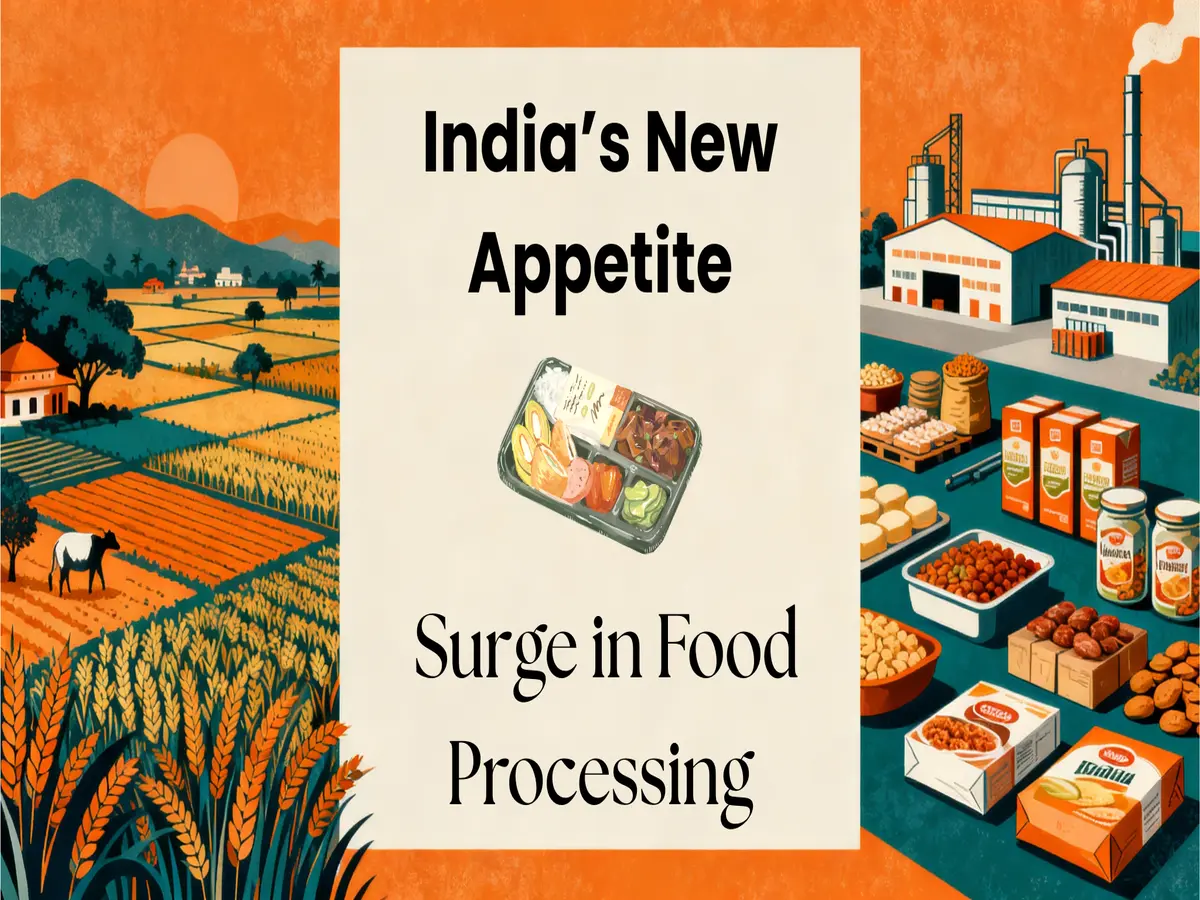
India’s food processing industry is moving into a new growth phase as daily eating habits change at home, at work, and on the go. For food processors and agrifood startups this shift is not just a trend but a clear roadmap for where to place the next wave of products, plants, and partnerships. The key question now is how quickly businesses can redesign portfolios and supply chains to match the way India eats today.
India’s organised food processing market already runs into several lakh crore rupees in value and is growing faster than overall GDP in many sub segments. Rising incomes, a young population, and rapid adoption of e-commerce and modern retail make new food formats easier to discover and buy, keeping demand for processed and packaged foods on a steady upward track.
Changing Consumption Patterns In India
Consumers are moving beyond a simple choice between traditional home cooked food and a few basic packaged items. Preferences are spreading in many directions, which creates several distinct growth paths for processors.
Some clear shifts that stand out
- Urban and working consumers are picking up more ready to eat and ready to cook products during the week to save time on routine meals.
- Health seekers are shifting toward low sugar, low salt, high protein, millet based, and fortified foods and snacks.
- Middle and higher income buyers are trying organic, clean label, and minimally processed options and checking labels more carefully.
- Households are mixing global cuisines with regional favourites, so pasta, momos, and hummus now sit next to poha, idli, and sabzi.
- E-commerce and quick delivery platforms are pulling in products that store, travel, and reheat well, from frozen items to boxed meals.
These shifts vary by region and income level, but together they point toward a steady move to processed, branded, and differentiated food products rather than purely loose, unbranded staples.
Market Size And Growth Potential
Food processing already ranks among India’s largest industries by output and employment. With rising consumption and exports, its role is set to increase further in the coming years.
In recent years, the overall processed food market has expanded rapidly and is projected to keep growing at a healthy pace, often in high single to low double digits annually in value terms. Rising per capita income, urbanisation, and a young demographic push this demand, while investments in cold chains, food parks, and logistics make it easier for companies to supply a wider geography.
Growth now cuts across categories. Dairy, bakery, snacks, beverages, meat and fisheries, fruits and vegetables, and health foods are all gaining importance. Companies that align product mix, price points, and branding with these shifts can capture a larger share of consumer spending both within India and in export markets.
Health, Wellness, And Functional Foods
Health focused consumption now runs through many food categories. People are far more aware of links between diet, fitness, and long term wellbeing. Parents read labels, younger buyers compare nutrition tables online, and older consumers actively watch salt and fat.
Brands are already acting in this segment by
- Fortifying staples like flour, oil, and milk with vitamins and minerals and positioning them as everyday upgrades.
- Launching high protein snacks using pulses, nuts, seeds, and plant protein blends for gyms, offices, and hostels.
- Developing functional foods and drinks with turmeric, ginger, herbs, and millets and framing them around immunity, digestion, or energy.
- Reformulating existing lines to cut sugar, reduce additives, and simplify ingredient lists while keeping taste familiar.
Processors that back claims with clear nutrition information and testing and avoid over-promising can build durable trust with health conscious consumers.
Organic, Natural, And Clean Label Products
Concerns about pesticide residues, food safety, and additives are driving a visible shift toward organic and natural products in specific consumer pockets. While still a smaller slice of the total market, this space is growing steadily in metros and larger towns.
Companies are building this space by
- Creating organic ranges of cereals, pulses, spices, and mixes that convert farm output into convenient branded packs.
- Rolling out natural fruit juices, cold pressed oils, and traditional pickles or chutneys without artificial preservatives.
- Designing export oriented organic and fair trade lines for markets that pay a premium for traceable, sustainable sourcing.
Here, the edge usually lies in strong certification systems, clean and honest packaging, and clear traceability from farm to pack that reassures cautious buyers.
Convenience Foods For Busy Lifestyles
Busier schedules, dual income households, and long commutes are shrinking the time available for cooking. Yet taste, variety, and cultural food habits still matter deeply, so consumers prefer smart convenience over giving up familiar dishes.
Processors are responding by
- Rolling out ready to cook curry bases, gravies, and spice blends that cut prep time but keep the home cooked feel.
- Scaling frozen snacks, parathas, vegetables, and complete meals that can be heated and served quickly.
- Packaging regional speciality products like idli dosa batters, poha mixes, and millet based breakfast options for daily routines.
Success in this space rests on consistent taste, simple instructions, and pack sizes suited to small families and individuals. Visibility on food delivery and quick commerce apps then boosts discovery and trial.
Value Addition And Farmer Linkages
Changing consumption patterns toward processed and packaged food naturally increase the scope for value addition after harvest. Fruits, vegetables, milk, meat, and fish can all yield a range of processed products that fetch better prices and reduce wastage.
Processors now invest more in
- Fruit and vegetable units that turn harvests into juices, pulps, purees, dehydrated slices, and frozen produce.
- Dairy products such as cheese, yogurt, flavoured milk, and packaged traditional sweets designed for longer shelf life and wider reach.
- Modern plants for meat, poultry, and marine products that meet strict hygiene norms for retail and export.
When these activities link closely with farmers through contracts, cooperatives, or producer companies, both sides gain. Farmers get stable demand and better price visibility, while processors secure consistent quality and supply.
Export Growth And Global Interest In Indian Food
Across the world there is rising curiosity about Indian flavours, vegetarian dishes, and spice led products. At the same time many countries are seeing higher demand for plant based and ethnic foods, which gives Indian brands a natural advantage.
Processors are capitalising on this by
- Shipping ready to eat Indian meals, frozen breads and snacks, and spice mixes to both diaspora and local consumers abroad.
- Supplying processed spice ingredients, extracts, and nutraceutical components to international food and health companies.
- Building organic, fair trade, and specialty product lines that comply with stricter overseas standards.
Strong quality control, on time delivery, and careful labelling and safety compliance are essential to turn this interest into long term export relationships.
Technology, Packaging, And New Retail Channels
Technology and packaging now sit at the centre of serving these new patterns of demand. Automation and digital systems improve consistency, safety, and traceability inside plants. Investments in cold chains make it possible to distribute perishable processed foods across longer distances without high spoilage. Modern packaging solutions extend shelf life while keeping ingredient lists tighter.
On the market side, new retail and digital channels have lowered entry barriers. Supermarkets, e-commerce platforms, direct to consumer sites, and quick commerce apps let even smaller brands reach a national audience. Products that store well, clearly state their benefits, and fit these channels’ logistics models often move faster off both physical and virtual shelves.
How Businesses Can Align
To tap opportunities in this changing environment, businesses in food processing and agrifood can turn broad trends into specific, practical moves.
- Define one or two core consumer segments, such as health focused urban millennials or value seeking small town families, and build dedicated product lines for them instead of trying to serve everyone.
- Map three to five concrete pain points to solve, such as weekday meal prep time, lack of safe snacks for kids, or difficulty storing fresh produce, and design products that clearly address those gaps.
- Build structured sourcing relationships with farmers or FPOs for key crops rather than relying only on spot markets, starting with written quality specs, basic training, and simple incentives for better produce.
- Set up regular food safety and shelf life testing and put visible cues like batch numbers and QR codes on packs so buyers feel comfortable choosing processed options more often.
- Use social listening, marketplace reviews, and quick pilots on e commerce and quick commerce platforms to tweak recipes, pack sizes, and price points before scaling.
For processors, agri businesses, and founders, this is a strong moment to revisit product portfolios, upgrade sourcing and quality systems, and rethink partnerships so they match the way India eats now rather than the way it ate a decade ago. Firms that listen closely to consumers, respect safety and sustainability, and connect farms to new age markets are likely to gain the most from this steady change in how the country cooks and eats.