fb-pixel

Category Strategic Planning

5 State Elections Just Happened: What the Results Mean for India’s Economy and Business

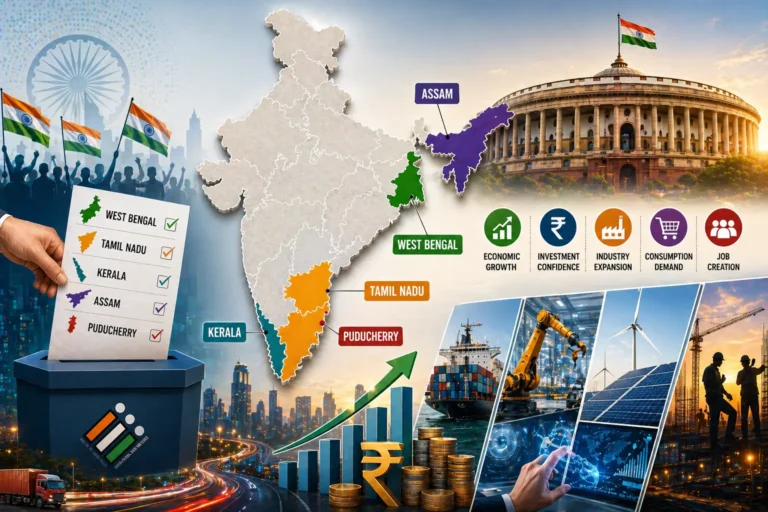
Five states and one union territory. Eight hundred and twenty-four assembly seats. Millions of voters are making decisions that will shape five distinct economies for the next five years. The counting is done, the results are in. Here is what they mean for investment, business, jobs, and growth across some of India’s most economically significant regions. Every five years, state assembly elections do something that national economic forecasts often miss. They decide who controls the levers of industrial policy, infrastructure spending, land acquisition, labour law administration, power pricing, and investor relations in some of India’s largest and most strategically important states. The results announced on 4 May 2026 for West Bengal, Tamil Nadu, Kerala, Assam, and Puducherry are not just a political scorecard. They are an economic map of what the next five years could look like across a combined population of over 300 million people. Together, these five regions represent a significant share of India’s industrial output, IT exports, tea production, automobile manufacturing, tourism revenue, and coastal trade. Understanding what election outcomes mean for these economies is not a matter of political opinion. It is a matter of business planning, investment strategy, and informed decision-making for anyone with interests in these markets. This article does not take political sides. It examines each state and union territory through the lens of economy and opportunity, drawing on verified data to explain what is at stake for businesses, investors, and residents in each region. Five states and one union territory, with a combined economic output worth trillions of rupees. The results of these elections will shape infrastructure spending, investment policy, and business conditions across a third of India’s population for the next five years. Why State Elections Matter for the Economy The connection between state election outcomes and economic performance is direct […]