

In 2026, India’s global trade strategy has entered a defining phase.
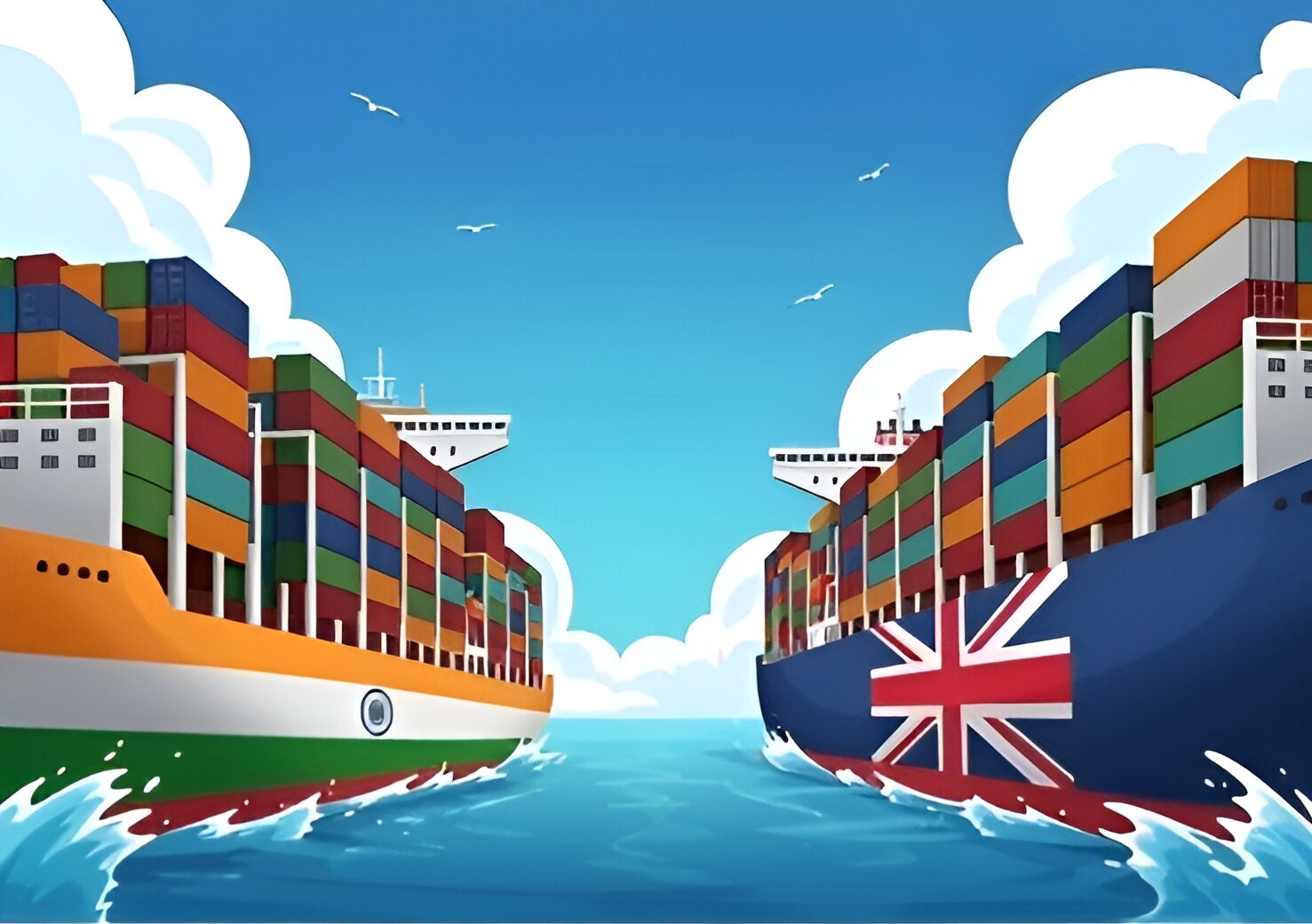
The India-United Kingdom Free Trade Agreement (FTA) is not merely a diplomatic milestone. It represents a structural shift in how Indian businesses can position themselves globally, particularly in one of the world’s most mature and high-value markets.
For exporters, manufacturers, service providers, and scaling enterprises, this agreement is not just about tariff reductions.
It is about competitiveness.
It is about compliance maturity.
It is about operational readiness.
And most importantly, it is about strategic positioning for the next decade.
While headlines focus on trade volumes and political wins, businesses must focus on something more fundamental:
Are we structurally prepared to benefit from this agreement?
Understanding the India-UK Free Trade Agreement: Beyond Tariff Cuts
At its core, the India-UK FTA seeks to reduce tariffs, simplify trade procedures, improve market access, and strengthen regulatory cooperation between both nations. It also aims to enhance bilateral investment and ease cross-border commercial activity.
For Indian businesses, this opens doors across multiple sectors, including textiles and apparel, pharmaceuticals, IT and business services, automotive components, agri-products, and professional services. However, market access alone does not guarantee market success. The real differentiator lies in whether a business is prepared to operate at international standards consistently and predictably.
Why This Agreement Is Structurally Significant
Unlike short-term trade fluctuations, free trade agreements create long-term competitive frameworks. They alter how businesses price, operate, comply, and compete.
The India-UK FTA influences several structural dimensions, including pricing models and margin strategies, supply chain configuration, documentation systems and compliance frameworks, contract structuring, and cross-border taxation clarity
It also increases competition. UK firms gain easier access to Indian markets, and Indian businesses gain access to the UK. The competitive landscape becomes bilateral. Indian businesses must now compete not just locally, but structurally globally.
1. Operational Readiness: The First Competitive Filter
Lower tariffs may improve margins, but operational inefficiencies can quickly erase those gains. Export-focused businesses must move beyond ambition and assess whether their systems are built for global delivery. This includes evaluating production capacity, quality assurance mechanisms, vendor coordination, and delivery timelines.
The UK market demands consistency and traceability. An informal operational structure that works domestically may struggle under international scrutiny. Scaling exports requires systems, not just opportunity.
2. Compliance and Documentation: Precision Over Informality
Trade agreements often bring stricter documentation expectations.
Indian exporters must ensure that compliance is embedded into daily operations, not treated as an afterthought. This includes areas such as:
- Rules of origin verification
- Regulatory certifications
- Accurate customs documentation
- Contractual clarity
- Data-sharing standards
In global markets, credibility is built on precision. A single documentation gap can delay shipments, create financial penalties, or damage long-term relationships. Businesses that integrate compliance into operational design gain smoother trade flow and stronger credibility.
3. Pricing Strategy and Margin Structuring
Tariff benefits create pricing flexibility. But without financial visibility, that flexibility can turn into miscalculation.
Before adjusting pricing strategies, leadership teams must evaluate:
- True cost structures
- Hidden operational inefficiencies
- Currency risk exposure
- Contractual protection against volatility
Revenue growth without clarity on margins creates vulnerability. Strategic pricing under an FTA requires disciplined financial reporting and structured forecasting.
4. Supply Chain Reconfiguration: Planning Before Expansion
The FTA may encourage businesses to rethink their supply chain models. Reduced tariffs and improved trade flow can create opportunities for new sourcing strategies and distribution networks. However, expansion must be carefully aligned across departments.
A successful cross-border supply chain requires coordination between procurement, production, logistics, finance, and compliance
Sudden expansion without structural alignment can create bottlenecks and strain working capital. Global trade success is less about speed and more about synchronization.
5. Governance and Risk Management
Entering or expanding into international markets increases exposure to new forms of risk.
Cross-border trade introduces complexity in legal contracts, regulatory audits, currency management, and political or policy shifts
To manage these risks effectively, businesses must strengthen internal governance systems. This includes clearer reporting mechanisms, defined risk assessment frameworks, structured contract review processes, and robust data management practices. Governance maturity directly impacts investor confidence and partnership quality.
6. The Service Sector Opportunity
India’s services sector, particularly IT, consulting, healthcare support, and financial services, stands to benefit significantly from improved market access.
However, service exports are built on credibility and consistency. This demands:
- Strong data protection compliance
- Cybersecurity safeguards
- Structured project management systems
- Clear service-level agreements
In services, delivery reliability defines reputation. The ability to execute consistently across borders depends on documented systems and measurable performance standards.
7. Scaling Beyond Geography: Repositioning for Global Standards
International expansion is not merely about entering a new market. It changes how the business is perceived. UK clients and partners often evaluate firms based on transparency, governance clarity, communication standards, and operational reliability.
Scaling under the FTA requires internal alignment before external expansion. It is a strategic repositioning, from domestic operator to globally competitive enterprise.
8. The Risk of Expansion Without Structural Strength
While the FTA presents an opportunity, unprepared expansion can amplify weaknesses. Common pitfalls include overcommitting capacity, underestimating compliance timelines, mismanaging cash flow cycles, and ignoring currency exposure risks.
Growth must be phased and modeled carefully. A structured expansion plan supported by operational audits and financial planning reduces vulnerability and improves sustainability.
9. Strategic Questions for 2026
Before aggressively entering or expanding in the UK market, leadership teams should pause and reflect:
- Are our export workflows documented and standardized?
- Is our compliance system audit-ready?
- Do we have financial visibility across cross-border transactions?
- Are contracts structured to manage volatility?
- Is our governance framework scalable?
These questions determine whether the FTA becomes a competitive advantage or a structural strain.
Turning Policy into Performance
Free trade agreements create macro-level opportunities. But performance is built at the micro level, within individual businesses.
The India-UK FTA will reward those who:
- Strengthen operational foundations
- Embed compliance into daily processes
- Improve financial visibility
- Align supply chains strategically
- Invest in governance maturity
International competitiveness in 2026 is no longer optional. It is structural.
Final Thoughts: Opportunity Favors the Prepared
The India-UK Free Trade Agreement represents more than a policy shift. It signals India’s deeper integration into global trade networks. For exporters and scaling businesses, this is a pivotal moment.
But opportunity alone does not guarantee growth. Businesses that approach this transition strategically, with structured systems, financial clarity, and operational discipline, will convert policy into sustained advantage.
In 2026, global expansion is not just about access. It is about readiness. And readiness is built internally, long before the first shipment leaves port.