

In 2026, global business expansion is unfolding under a very different financial environment than the one that defined the previous decade.
From 2010 through 2021, historically low interest rates across major economies created an era of abundant liquidity. Borrowing was inexpensive, valuations expanded rapidly, venture funding surged, and debt-financed expansion became common practice. Capital availability often acted as a buffer against operational inefficiencies and strategic miscalculations. That era has structurally shifted.
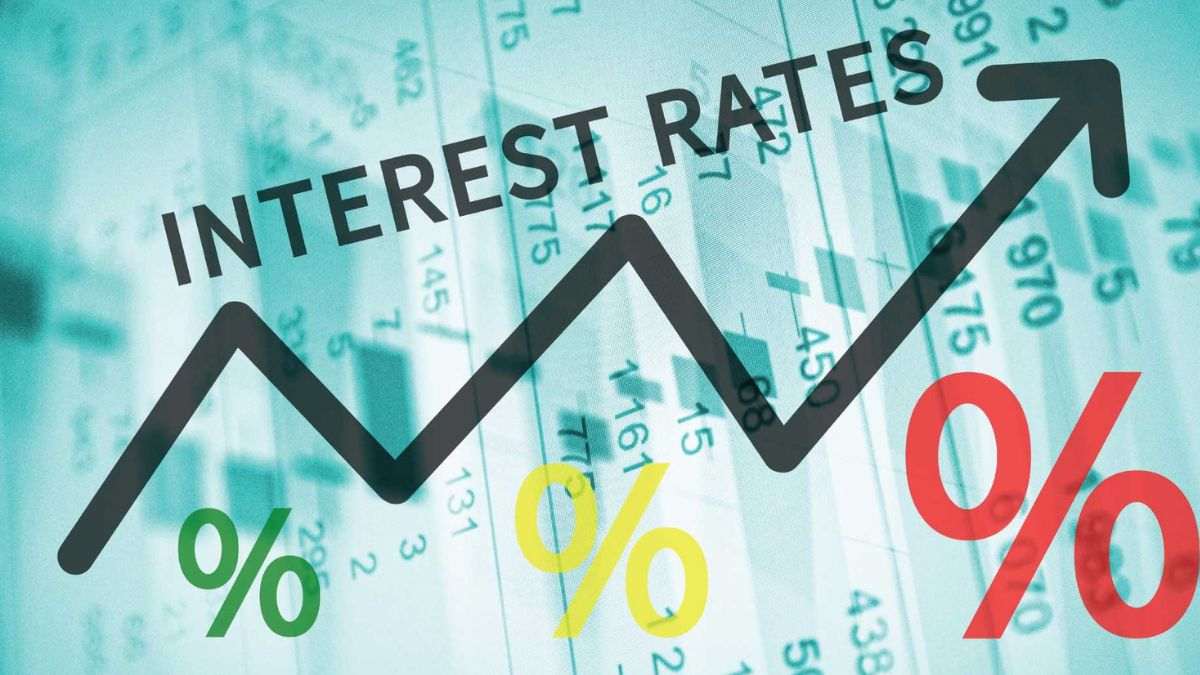
In response to inflationary pressures, geopolitical instability, and post-pandemic economic recalibration, central banks across the United States, Europe, and other major economies tightened monetary policy. Even where rate cuts have begun gradually, borrowing costs remain materially higher than the ultra-low levels businesses had grown accustomed to.
The result is not a temporary slowdown. It is a structural reset in how expansion must be evaluated. Capital now carries weight. Strategy must reflect that weight.
A Structural Shift in the Cost of Growth
When capital is inexpensive, growth decisions tend to emphasize speed and scale. Companies expand into new markets, invest in technology upgrades, diversify product lines, and increase headcount under the assumption that financing will remain accessible. Higher global interest rates call that assumption into question.
Every expansion decision now carries a clearer financial consequence. The cost of debt is higher. Equity investors demand stronger returns. Refinancing risk is more visible. Cash flow discipline becomes critical. This shift changes how leadership teams must think about growth. Expansion is no longer assessed solely based on market opportunity or competitive positioning. It must also be evaluated against the cost of capital, balance sheet resilience, and downside risk exposure. Growth that does not generate durable economic value becomes difficult to justify.
Capital Allocation Becomes Central to Strategy
In a low-rate environment, capital allocation often operates in the background. With funding easily accessible, companies may pursue multiple initiatives simultaneously, assuming that financing gaps can be bridged externally.
In 2026, capital allocation sits at the center of strategic planning.
Leaders must now prioritize projects based on return on invested capital rather than projected top-line contribution alone. Initiatives that tie up cash without generating predictable returns strain liquidity. Long payback periods require stronger justification. Sensitivity to rate movements must be modeled before execution. This discipline reshapes internal decision-making. Expansion into a new geography, acquisition of a competitor, investment in automation, or launch of a new product line must all compete for limited capital bandwidth. Not every opportunity deserves funding.
The question is no longer “Can we grow?” but “Should we allocate capital to this growth, given its true cost?”
The Changing Role of Debt in Expansion
Higher interest rates directly affect borrowing costs, but their influence extends beyond simple expense calculations. For businesses relying on working capital facilities, term loans, or structured debt instruments, rising rates reduce free cash flow and increase fixed financial obligations. This constrains flexibility. It narrows error margins. It increases vulnerability during revenue fluctuations.
Expansion strategies that depend heavily on leverage now require more conservative modeling. Companies must evaluate debt-service coverage ratios under stress scenarios, consider refinancing risk in volatile markets, and maintain sufficient liquidity buffers to withstand delayed receivables or cost overruns. Debt remains a legitimate growth tool. However, its role has become strategic rather than automatic. Leveraged expansion must be deliberate, supported by predictable cash flows and strong operational foundations. In this environment, balance sheet strength becomes a competitive asset.
Investor Expectations in a Higher-Rate World
The cost of capital also reshapes investor behavior.
As interest rates rise, safer financial instruments such as government and corporate bonds offer more attractive yields. This alters the risk-return tradeoff for institutional investors. Risk capital now demands stronger fundamentals to justify deployment.
For scaling businesses, this translates into stricter scrutiny of:
- Unit economics
- Path to profitability
- Revenue quality and stability
- Governance maturity
- Reporting transparency
Valuation models increasingly incorporate disciplined financial assumptions rather than aggressive growth projections. In practical terms, businesses seeking funding in 2026 must demonstrate operational coherence and financial clarity. Investor conversations now revolve around resilience as much as growth. Companies that previously relied on optimistic narratives must now present structured financial logic.
Operational Efficiency as a Capital Strategy
In a higher interest rate environment, operational efficiency becomes more than an internal optimization initiative. It becomes a capital strategy. Working capital cycles directly influence liquidity. Inventory mismanagement ties up cash unnecessarily. Inefficient procurement inflates cost structures. Poor visibility across departments obscures financial risk.
Businesses that strengthen internal systems, integrating finance, operations, and data reporting, reduce dependency on external financing. Cash released through operational improvements can be redeployed into strategic initiatives without increasing leverage. This integration is critical. Expansion supported by weak internal processes amplifies risk. Conversely, structured operations enhance financial resilience and increase confidence among lenders and investors.
Efficiency is no longer incremental improvement. It is structural reinforcement.
Geographic Expansion Under Financial Constraint
International expansion remains attractive for many businesses, particularly in high-growth sectors. However, higher interest rates introduce new layers of complexity. Currency volatility often accompanies monetary tightening cycles. Consumer demand patterns may fluctuate as borrowing costs affect spending behavior. Cross-border capital flows become more selective.
Businesses entering new markets must therefore integrate financial stress testing into their planning. Scenario analysis should examine revenue underperformance, cost overruns, and delayed break-even timelines. Liquidity buffers must be realistic rather than optimistic. Phased market entry may prove more sustainable than simultaneous multi-market expansion. Strategic partnerships may reduce capital exposure compared to wholly owned expansion models. The objective shifts from rapid footprint growth to a durable international presence.
Startups and Scale-Ups: A Recalibration of Expectations
High-growth startups and venture-backed companies are particularly sensitive to interest rate dynamics. During the liquidity-heavy years, funding rounds were frequent, and valuations were aggressive. Growth metrics often took precedence over profitability.
In 2026, funding environments demand measurable progress toward financial sustainability.
Burn rates must align with realistic assumptions about capital access. Cost structures must be defensible. Expansion strategies must demonstrate credible pathways to break-even. This recalibration does not eliminate innovation. It introduces discipline into innovation. Startups that embed financial rigor early in their growth journey are better positioned to withstand capital tightening cycles. Those built primarily on momentum may face restructuring or strategic downsizing.
Risk Management and Strategic Resilience
Higher interest rates interact with broader macroeconomic forces, including geopolitical tensions, supply chain realignment, and evolving regulatory frameworks. Expansion strategies cannot be designed in isolation from these variables.
Comprehensive risk assessment now requires:
- Sensitivity modeling under varying rate scenarios
- Conservative leverage thresholds
- Clear contractual protections in financing agreements
- Transparent internal reporting mechanisms
- Governance oversight aligned with scale
Resilience becomes measurable through financial preparedness rather than aspirational planning. Companies that embed risk management into expansion architecture strengthen their long-term positioning.
A Redefinition of Sustainable Growth
The end of cheap capital does not signal economic contraction. It signals structural normalization. For years, abundant liquidity masked weaknesses in business models, operational inefficiencies, and governance gaps. Low borrowing costs allowed companies to sustain aggressive expansion strategies that might not have survived under tighter conditions.
In 2026, expansion must be supported by stronger foundations.
Sustainable growth now depends on:
- Financial clarity across departments
- Disciplined capital allocation
- Integrated operational systems
- Transparent governance structures
- Measured risk exposure
Expansion is no longer about accessing funds easily. It is about deploying funds responsibly.
Conclusion: Strategy in a Capital-Conscious Era
Higher global interest rates have reshaped the economics of expansion. Capital is not scarce, but it is selective and priced with greater scrutiny. This reality elevates the importance of disciplined strategy, integrated financial planning, and operational coherence.
Businesses that treat capital as a strategic resource, aligning growth ambitions with balance sheet strength and governance maturity, will navigate this environment effectively. Those who rely on outdated assumptions of perpetual liquidity may encounter structural strain.
The shift underway in 2026 is not cyclical noise. It is a recalibration of financial discipline across global markets. In this capital-conscious era, expansion remains possible. But it must be intentional, analytically grounded, and structurally resilient.