

Nearly 3 crore vehicles sold. Five of six segments at all-time highs. Rural India outpacing cities. And an EV transition is quietly gathering speed. Here’s the full story behind India’s record-breaking automobile year.
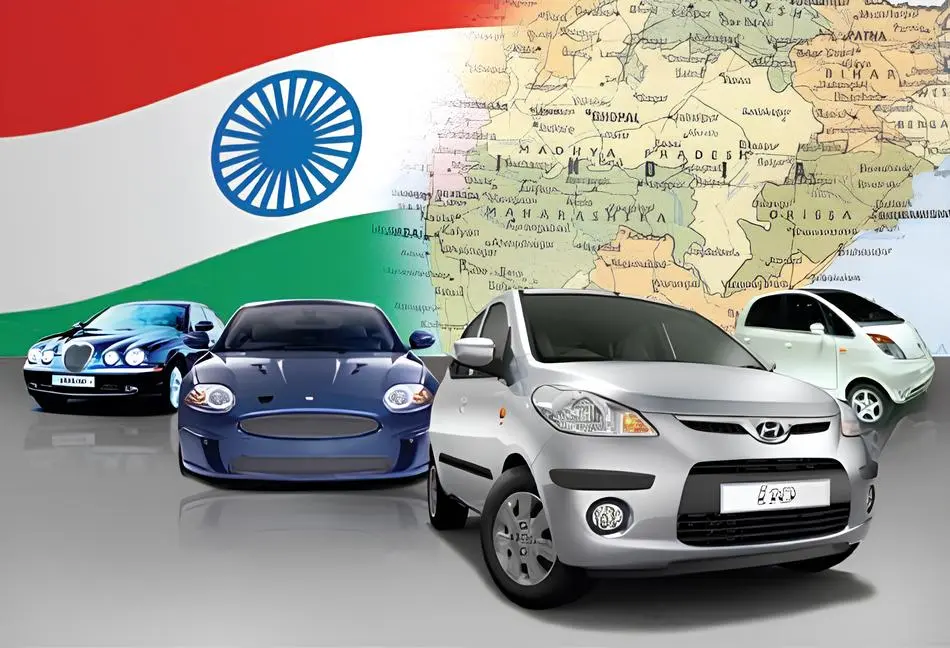
Picture a single number: 2.97 crore. That is how many vehicles, cars, bikes, trucks, tractors, and autorickshaws were sold across India in the financial year 2025–26. It is the highest number ever recorded in India’s automotive history, and it brings the country tantalizingly close to the once-unimaginable milestone of 3 crore annual sales.
To put it in perspective, that is roughly one vehicle for every 50 Indians. Every working day of FY26, Indian consumers drove away with an average of over 8 lakh vehicles. March 2026, the final month of the fiscal year, delivered 26.92 lakh units, the best single month the industry has ever seen. The Federation of Automobile Dealers Associations (FADA), which tracks retail sales across the country, described FY26 as a ‘landmark year’, one driven not by a single hot month or a fleeting trend, but by genuine structural demand that kept building through the year.
13.30% year-on-year growth. About 2.97 crore units sold. Five of six vehicle segments at all-time highs. India’s auto sector didn’t just have a good year. It had its best year in its history.
The Numbers Segment by Segment
The growth was genuinely broad-based, not driven by one category alone. Here is how each segment performed:
| Segment | FY26 Units Sold | Year-on-Year Growth |
|---|---|---|
| Two-Wheelers | 2.14 crore | +13.40% (surpassed pre-Covid peak) |
| Passenger Vehicles | 47.05 lakh | +13% (first time above 47 lakh) |
| Tractors | over 1.05 lakh | +18.95% (fastest-growing segment) |
| Three-Wheelers | 13.63 lakh | +11.68% |
| Commercial Vehicles | 10.60 lakh | +11.74% (above 10 lakhs first time) |
The only segment that did not celebrate was construction equipment vehicles, which declined by 11.70% due to project-specific delays. Every other category posted a record annual figure.
Driver 1: GST 2.0 Changed the Math on Affordability
FY26 was a year of two halves, and the dividing line was a single policy move. The first five months, April through August 2025, were subdued. Consumers were cautious, dealers were uncertain, and demand was building slowly. The industry was waiting to see what the government’s much-discussed GST rationalisation would actually deliver. When GST 2.0 arrived in September 2025, it changed the calculation for buyers almost immediately. The rate cuts specifically targeted mass-segment vehicles, the scooters, entry-level motorcycles, and small passenger cars that middle-income and first-time buyers aspire to. GST on electric vehicles was reduced from 12% to 5%. For the everyday buyer, these changes translated directly into lower sticker prices and lower EMIs.
From September onwards, the impact was unmistakable. The festive season, Navratri, Diwali and the wedding season that followed delivered an all-time record single-month of over 40 lakh units. January, February, and March 2026 each posted strong double-digit growth, confirming that the demand shift was not a one-month festive spike but a genuine structural lift in affordability.
GST 2.0 did not just give the auto sector a festive boost. It permanently improved affordability for mass-market buyers, shifting what once was cautious decision-making into action.
Driver 2: Rural India Came Alive
One of the most significant and least covered stories of FY26 is what happened outside India’s cities.
In March 2026, rural auto retail grew at 26.49% year-on-year, outpacing urban growth of 23.82%. This was not an isolated month. Throughout the second half of FY26, rural markets consistently matched or exceeded urban growth, driven by a combination of forces that have been quietly building for years. Better monsoons in 2025 boosted agricultural incomes. The Kisan Credit Card limit was raised from ₹3 lakh to ₹5 lakh, unlocking additional low-interest credit for farmers. Rural wage growth improved as food inflation eased and real purchasing power increased. And the reach of highway and road infrastructure into smaller towns and villages has made vehicle ownership not just aspirational but practically necessary for work and commerce.
The fastest growing segment of the year, tractors, at 18.95% growth, tells this rural story most clearly. Farmers investing in tractors are not making luxury purchases. They are making business decisions about productivity and income. That level of investment signals genuine confidence in rural economic conditions.
- Two-wheelers surpassed their pre-COVID-19 peak: The 2.14 crore two-wheelers sold in FY26 finally erased the pandemic’s shadow. Rural buyers for whom motorcycles are often a primary mode of business were a major part of that recovery.
- Passenger vehicle demand in rural areas outpaced cities in March: For an industry long associated with urban aspirations, this geographic shift signals a maturing market with a broader reach.
- Dealer inventory normalised: Passenger vehicle dealer stock fell to approximately 28 days in March 2026, down from over 52 days in March 2025, a sign of healthy demand pulling supply through the chain, not excess stock being pushed to the market.
Driver 3: The SUV Shift and Premium Momentum
Inside the passenger vehicle segment, a powerful structural trend continued to accelerate: Indian buyers are increasingly choosing bigger, better-equipped, and more expensive vehicles. SUVs now account for over 50% of the passenger vehicle market. That is a remarkable shift for a market that, a decade ago, was dominated by small hatchbacks. The rise of Mahindra, whose SUV-only strategy drove 19.7% growth in FY26, making it the second largest passenger vehicle seller in India for the first time, is the most visible sign of this trend.
This premiumisation is not driven by wealthy buyers alone. It reflects rising aspirations and the availability of better financing. Today’s first-time buyer who might once have stretched for a hatchback is now stretching for an entry-level SUV. The features, space, and status that SUVs deliver have become the new baseline expectation for a large and growing slice of Indian buyers. Tata Motors grew domestic passenger vehicle sales 28% in March 2026, with its EV volumes surging 77% year-on-year. Maruti Suzuki posted its best-ever annual sales. The range of growth across brands confirms this is a market-wide trend, not a single company’s story.
India’s auto buyer has changed. The aspiration is no longer ‘any car’; it is increasingly ‘the right SUV’. That shift in preference is reshaping the entire product and investment strategy of the auto industry.
Driver 4: The EV Transition Is Quietly Accelerating
Electric vehicles are still a relatively small share of overall auto sales. But the direction of travel is unmistakable, and the pace is picking up.
In the three-wheeler segment, 60.95% of all retail sales in FY26 were electric, a majority by a wide margin. Three-wheelers are the workhorses of urban last-mile delivery and passenger transport, and the economics of electric have simply made more sense for commercial operators watching their fuel bills.
In two-wheelers, EV share reached 6.54% for the year, with several months showing the category’s strongest-ever numbers. In passenger vehicles, EV share rose to 4.25%, while CNG, which is cheaper to run than petrol in most Indian cities, captured a substantial 21.98% share. Major manufacturers are betting heavily on this transition. Tata Motors has committed ₹33–35 thousand crore between FY26 and FY30 specifically for its passenger vehicle and EV portfolio, including 30 new model launches. Honda is investing ₹1,200 crore to manufacture an electric SUV in Rajasthan. Mahindra and Mahindra is spending ₹20–25 thousand crore on EV expansion. The charging infrastructure gap is real and often cited as a barrier. But the investment announcements are accelerating, and as more models launch at more accessible price points, the adoption curve is likely to steepen.
What This Boom Tells Us About India’s Economy
Vehicle sales are not just an auto industry story. They are one of the most reliable real-time indicators of economic confidence in the country. When two-wheelers sell in record numbers, it tells you that rural workers and small business owners believe their incomes will support an EMI. When passenger vehicle sales hit 47 lakh units, it tells you that urban and semi-urban households are confident enough to make a major purchase decision. When commercial vehicles cross 10 lakh units, it tells you that businesses are investing in logistics and freight capacity because they expect demand to sustain.
All three happened simultaneously in FY26. That is not a statistical coincidence. It reflects an economy with genuine momentum, broad-based, multi-segment, supported by both policy and private demand.
The improvement in dealer inventory levels from 52 days to 28 days is particularly notable. High inventory means vehicles are piling up at dealerships because demand is not absorbing supply fast enough. Low inventory means demand is running ahead of supply. The move from 52 to 28 days means the pull is now coming from buyers, not the push from manufacturers.
When vehicles move, the economy is moving. The 3-crore milestone India is approaching is not just an auto industry number. It is a statement about the purchasing power, confidence, and aspirations of hundreds of millions of Indian households.
The Year Ahead: Reasons for Optimism and Caution
The industry enters FY27 with both momentum and headwinds. On the optimistic side, 74.7% of auto dealers surveyed by FADA expect growth to continue in FY27, anticipating expansion in the range of 3% to 7%. The Akshaya Tritiya season, the summer wedding season, and new product launches scheduled throughout the year are expected to sustain demand in the near term. On the cautious side, the three risks that dealers most frequently flag are real: potential economic slowdown from the global geopolitical environment, OEM supply disruptions already being felt in some segments, and fuel price pressures affecting buyer sentiment.
Specifically, 53.2% of dealers reported some level of supply disruption in March 2026 related to the West Asia conflict, and 36.5% said rising or expected fuel prices were affecting customer purchase decisions. These are not reasons to panic; demand remains structurally strong, but there are reasons to watch.
The longer-term picture remains compelling. India is the world’s third-largest vehicle market by volume. With vehicle penetration still significantly below global averages, a young population entering peak earning and spending years, and rising incomes across both urban and rural India, the growth runway ahead is long.
The Road Ahead:
India’s automobile sector did not just set records in FY26. It changed the narrative about what India’s consumer market is capable of. Three crore vehicles. Rural buyers outperforming cities. First-time SUV owners. Electric three-wheelers are the majority. A demographic dividend turning into a mobility wave. These are not separate trends; they are the same story, told through different segments.
The Indian auto sector in FY26 gave the world a clear signal: this is a market growing from its own internal strength, not just from global tailwinds. And with the 3-crore milestone now within reach, the industry’s ambition is no longer about matching the past. It is about what comes next.