

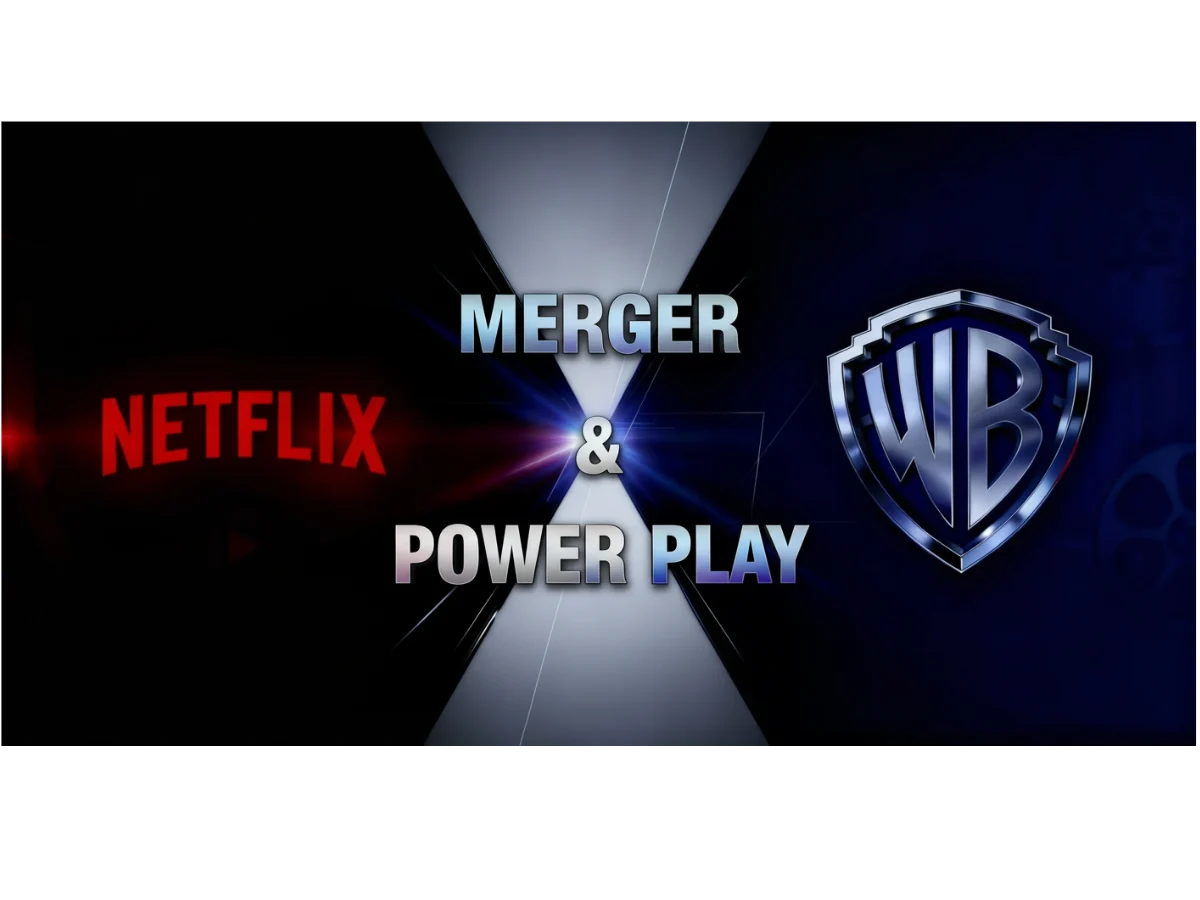
Ever wondered: if Netflix becomes home to DC and Harry Potter, what happens to every other streaming app?
For anyone who has ever rushed to a midnight premiere, spent weekends lost in Netflix binges, or grown up with Harry Potter and DC heroes, the news that Netflix is buying Warner Bros lands like a plot twist. It feels like two eras of entertainment crashing into each other. One side turned streaming into a daily habit on phones and smart TVs. The other helped build Hollywood itself, with a 100 year catalogue of films and series that define what many people call cinema.
Netflix has agreed to acquire Warner Bros for an equity value of about 72 billion dollars and a total enterprise value of 82.7 billion dollars, including debt. Netflix already leads streaming with more than 300 million paid memberships worldwide. Adding Warner’s catalogue and HBO Max (roughly 120 million users) further increases Netflix’s scale in streaming.
A New Hub For Streaming
The merger immediately reshapes the streaming landscape and how audiences find hits. Netflix, Amazon, and Disney together already control more than 60 percent of global streaming subscriptions. This deal pushes Netflix even further ahead. Imagine Stranger Things, Bridgerton, and Wednesday sitting next to DC films, Harry Potter, Lord of the Rings spin-offs, and Game of Thrones under one login.
For viewers, the shift means several key changes:
- A single app carrying both Netflix originals and Warner’s biggest titles.
- Many households may decide this one subscription covers most of what they want.
- Reduced need to juggle multiple services and separate monthly fees.
- Smaller platforms with leaner catalogues may struggle to justify standalone subscriptions.
The combined company gains serious leverage in content negotiations. It can use Netflix’s recommendation engine to push older Warner titles to new audiences, decide which projects deserve theatrical runs, and determine which should debut online. This control over both a deep library and a powerful discovery system makes it harder for rivals to cut through the noise.
Release Windows And Theatres
The key question is what happens to cinemas. Global box office revenue was around 30 billion dollars in 2024, still below pre-pandemic levels but recovering. Theatrical releases still matter for superhero films and large spectacles. Netflix has promised to keep Warner’s distribution agreements intact, yet the streaming side now has an incentive to shorten theatrical windows significantly.
The likely release patterns include:
- Mega franchises opening in theatres worldwide and arriving on Netflix within weeks instead of months
- Mid budget dramas and comedies skipping theatres entirely
- Series and spin-offs moving directly to streaming to drive subscriber engagement
- Premium formats and events becoming more important for box office success
For cinema owners, this is challenging. Multiplexes may lean harder into premium experiences like IMAX, large format screens, luxury seating, and fan events to justify ticket prices. Premium experiences create moments that home viewing cannot easily match. Independent cinemas can focus on festivals, retrospectives, local language films, and community screenings that algorithms cannot easily replicate. Smaller dramas or comedies are more likely to premiere directly on streaming, where completion rates and viewer engagement matter more than opening-weekend numbers.
How Other Streamers Respond
When one company becomes the clear heavyweight, rivals must reposition. Responses might include:
- Amazon Prime Video focusing on quality over quantity with awards contenders.
- Apple TV Plus leaning into prestige dramas and exclusive partnerships.
- Disney doubling down on family content, Marvel, and Star Wars exclusivity.
- Smaller platforms becoming add ons bundled with internet or mobile plans.
- Some services are experimenting with sports rights and reality programming.
For viewers, this could lead to a future where one or two massive apps hold most blockbuster films while smaller services offer niche programming.
Paramount’s Aggressive Counter Bid
While Netflix and Warner Bros announced their deal in early December 2025, Paramount and its backers immediately launched a hostile bid of their own, valuing Warner Bros at 108.4 billion dollars. Rather than negotiate with the board, Paramount made a direct appeal to shareholders, arguing that its offer provided better value and strategic fit.
Key points about the Paramount bid:
- Direct appeal to shareholders that bypasses the board.
- Valuation of 108.4 billion dollars versus Netflix’s 82.7 billion.
- Symbolises traditional media’s fight against tech platform dominance.
- Could create a different type of entertainment giant.
As of now, the battle between Netflix and Paramount for Warner Bros remains unresolved. Paramount’s aggressive push shows how high the stakes have become in media consolidation. Traditional media companies feel squeezed between tech platforms and rising content costs. This bidding war turns libraries of beloved franchises into the main bargaining chips in Hollywood. Whoever wins will control an entertainment empire that stretches across streaming, theatrical, and legacy TV assets.
For Paramount, a successful bid would create a giant more rooted in broadcasting, cable networks, and classic studios. Paramount already controls CBS, MTV, Nickelodeon, and Pluto TV alongside its film studio. Adding Warner would bring scale, but also complex integration risks. Netflix’s tech platform mindset and Paramount’s traditional media DNA represent two very different futures for Hollywood.
What Changes For Creators And Talent
Writers, directors, and actors face a narrower field of buyers with similar budgets. A merged Netflix and Warner company would control a huge slice of global streaming hits and theatrical blockbusters.
Changes for creative professionals are likely to include:
- Fewer alternative buyers for major projects.
- More reliance on data-driven metrics for greenlight decisions.
- Broader global reach for successful titles but less negotiating leverage.
- A need for new strategies in contract negotiations.
There are clear upsides, such as bigger worldwide audiences for breakout shows and films. The trade off is that if the merged company passes on a project, there are fewer comparable places to take it. Guilds and unions are already pushing for clearer royalty and bonus rules tied to global viewing data rather than just opening weekend numbers. Those talks will decide whether consolidation feels like a bigger stage or a smaller playing field.
Creators will face fewer buyers and more data-driven decisions.
What This Means In India
For Indian audiences and businesses, this merger is not just a distant Hollywood story. It changes how global content competes with local offerings:
- Hollywood tentpoles such as DC films, Harry Potter, and Game of Thrones linked projects become easier to access inside a single app.
- Local OTTs like JioCinema, SonyLIV, and Zee5 need to lean harder on sports rights, regional language originals, and sharper pricing to stand out.
- Indian multiplex chains such as PVR and INOX benefit from global franchise releases but must push premium experiences and fan events to compete with faster streaming drops.
- Regional films can focus on festivals, word-of-mouth, and strong theatre communities to hold ground against a more powerful global catalogue.
Where Things Stand Now
Netflix’s acquisition remains the leading bid, and Paramount’s hostile offer keeps the outcome uncertain while regulators examine both options. Antitrust authorities are expected to take months to review the deal and may attach conditions on licensing or release windows, and other studios are already exploring their own mergers as they watch how this plays out. For movie fans the final shape of entertainment is still in flux, and the answer may decide whether you end up paying for one super app that has everything or prefer three or four cheaper niche apps instead.
But here’s a question for you: Would you pay for one ‘super app’ that has everything, or prefer three or four cheaper niche apps instead?