

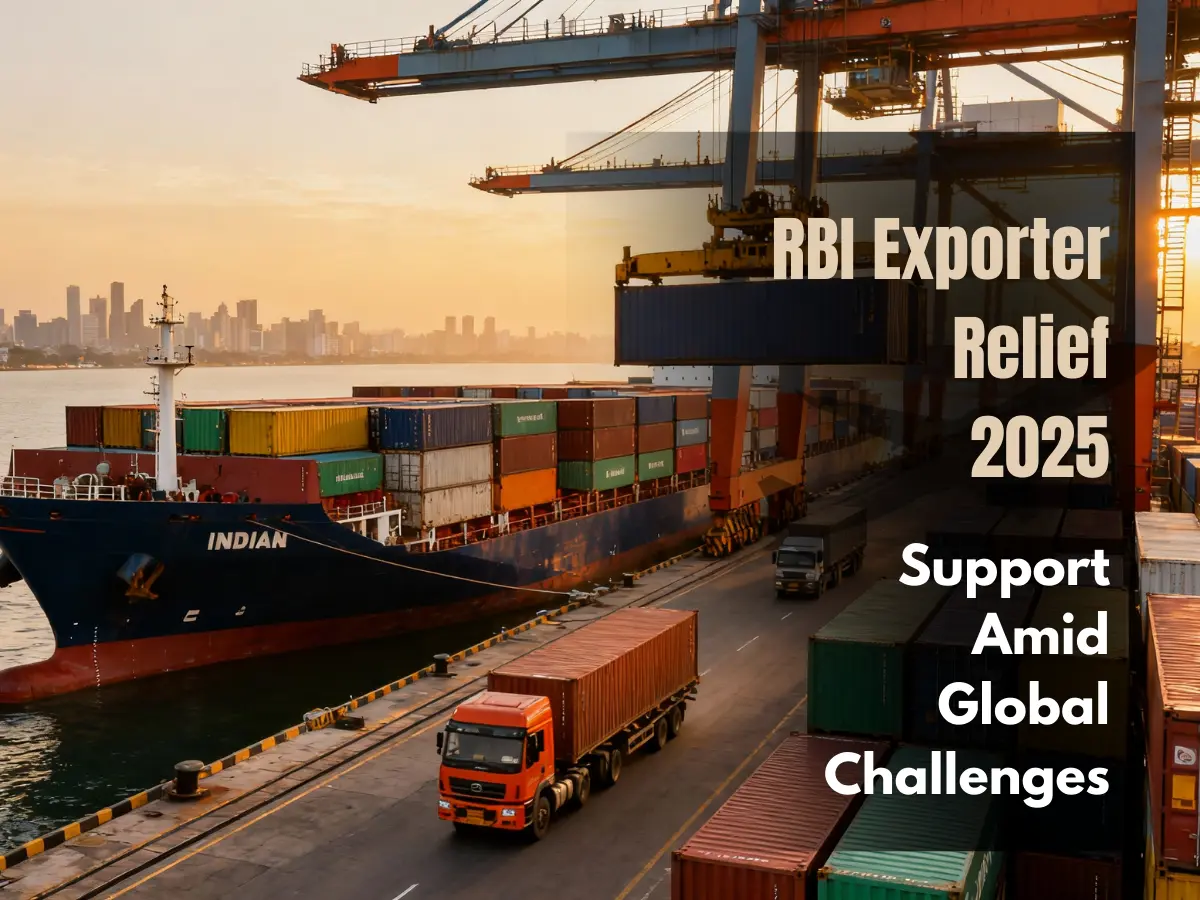
Indian exporters are facing a difficult global trade environment full of supply chain disruptions, tariffs, and ongoing uncertainties. These challenges often translate into real worries about cash flow and the ability to meet loan obligations. Recognizing this, the Reserve Bank of India (RBI) introduced key relief measures in 2025 to help exporters manage financial pressures. These include a moratorium on loan repayments and extended credit periods that ease immediate burdens, protect creditworthiness, and help exporters remain competitive internationally.
What the RBI Moratorium Means for Exporters
From September 1 to December 31, 2025, eligible exporters can postpone repayment of term loans and interest on working capital loans without penalty. Here are the essential details:
- Deferral of loan repayments and interest installments for four months
- Interest accrues simply, without compounding, making the burden lighter for exporters
- Accrued interest can be converted into a funded interest term loan, repayable between April and September 2026
- Banks can reduce margins on working capital loans and recalculate drawing power to boost liquidity
These practical features give exporters breathing room in a year defined by volatility.
Extended Export Credit and Shipment Timelines Provide Flexibility
In addition to the moratorium, RBI has extended export financing and shipment deadlines:
- Pre-shipment and post-shipment export credit repayment period expanded from 270 days to 450 days for loans disbursed up to March 31, 2026
- Exporters receiving advance payments have up to three years to ship goods, increased from the usual one year or contractual terms
These extensions bring much-needed flexibility to manage cash flow and logistics during periods of uncertainty.
Economic Impact of RBI’s Measures
RBI’s relief package goes beyond short-term easing. It aims to strengthen India’s entire export ecosystem by:
- Easing immediate cash flow constraints and debt servicing pressures, a lifeline for sectors under stress
- Preventing negative impact on exporters’ credit ratings by excluding moratorium periods from asset classification downgrades
- Allowing exporters to focus on operational stability and new market exploration rather than being weighed down by financial worries
- Paying special attention to micro, small, and medium enterprises (MSMEs), who bear the brunt of trade shocks and liquidity issues
Recent RBI statistics show banks’ outstanding credit to export sectors stood at ₹11,755 crore in October 2025, an indicator of the scale at which relief measures play a role in supporting the real economy. For MSMEs, fiscal benefits can reach up to ₹50 lakhs in 2024-25, boosting access to affordable credit to smaller exporters.
Key Sectors and Beneficiaries
The relief measures apply to exporters across these major sectors:
- Chemicals, textiles, iron and steel
- Electrical machinery and equipment
- Plastics, rubber, leather, and apparel
- Vehicles and fisheries
Both large exporters and MSMEs benefit from these measures, with textiles and apparel, for example, contracting almost 13% in export value in October 2025 due to steep U.S. tariffs. The RBI’s support is timely for these vulnerable sectors.
The Human Impact: Resilience in Uncertain Times
For many exporters, these policy steps mean not only financial relief but a renewed sense of hope to recover and regroup strategically. Soaring tariffs and fast-changing regulations have left business owners anxious about survival. The RBI’s moratorium, along with liquidity provisions, signals that policy makers believe in the resilience of India’s exporting community and trust them to adapt and thrive despite adversity.
Textile manufacturers, for example, express cautious optimism as cash flow pressures ease, allowing them to retain jobs and keep operations running. MSMEs report using freed-up resources to explore new markets, invest in product upgrades, and tackle logistics setbacks. The wider export community breathes easier, seeing official support at a critical time.
How Exporters Can Use These Measures to Their Advantage
To fully leverage RBI’s support, exporters should:
- Review all outstanding export loan obligations and eligibility for relief measures
- Communicate early with lenders to apply for moratorium benefits and extension options
- Use the extra time to optimize working capital and cash flow management
- Adopt transparent governance and sustainable business practices to appeal to global buyers and financial institutions
- Stay updated on RBI and government policy changes affecting export finance
Indian exporters who take a proactive approach can transform a period of policy relief into a springboard for long-term stability and growth.
Looking Ahead: Adapting to Trade Realities
In 2025, India’s export sector faces global trade tensions, competitive pressures, regulations and technological gaps. Fifty percent tariffs from the US cover products from textiles to footwear and gems, making diversification necessary and government support vital. Supply chain bottlenecks, currency fluctuations, and stricter buying standards require exporters to innovate, digitalize, and seek greener solutions, despite higher upfront costs.
The RBI’s package, paired with schemes like the Credit Guarantee Scheme for Exporters offering collateral-free loans up to ₹20,000 crore, lays the groundwork for enduring competitiveness and international credibility. These programs encourage exporters to focus on quality, market discovery, and risk mitigation while building resilience.
Conclusion
The RBI’s 2025 moratorium and extended export credit terms offer critical support to Indian exporters confronting global uncertainties and market volatility. The measures safeguard liquidity, protect credit ratings, and allow businesses to sustain growth and contribute strongly to the national economy.
Exporters who actively use these targeted relief options will be better equipped to handle challenges, stabilize their operations, and seize new international opportunities. RBI’s proactive approach proves how adaptable finance policy is an engine for India’s trade competitiveness.
As exporters harness these relief measures in 2025, the country’s export sector commits anew to innovation, compliance, and smart risk management. With trust and determination, Indian exporters continue to build bridges to new markets, protecting livelihoods and driving prosperity through turbulent times.