

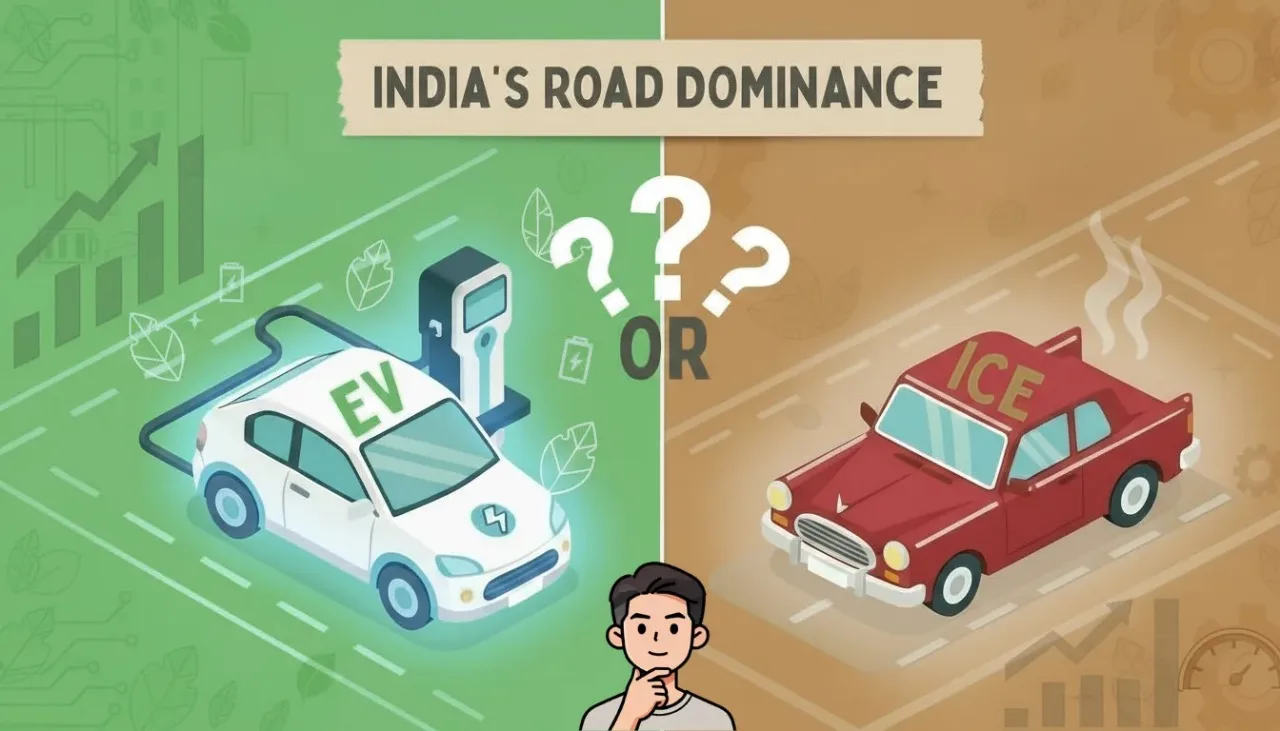
ICE vs EV Cars: Are Indians Still Preferring Internal Combustion Engines?
India’s automobile sector stands at a critical point. Electric vehicles (EVs) have gained unprecedented traction due to government incentives, cutting edge technology, and environmental concerns. Yet, despite rising interest, traditional internal combustion engine (ICE) vehicles overwhelmingly continue to dominate Indian roads. This blog analyzes in depth as to why.
1. Government Push for EVs: Incentives and Ambitions
The Indian government is actively promoting EV adoption. Minister Nitin Gadkari’s announcement to lower import duties on EVs and encourage domestic manufacturing is a strong signal.
Programs like Faster Adoption and Manufacturing of Hybrid & EV (FAME-II) alongside various state subsidies aim to make EVs affordable and accessible.
2. E20 Fuel: A Hurdle for ICE Vehicles
The mandatory E20 fuel blend policy, mixing petrol with 20% ethanol, is meant to reduce emissions. However, this has posed new challenges for ICE vehicles.
Many older and non-compatible engines experience roughly 10% drops in mileage, engine knocking, and accelerated wear.
One owner shared, “After switching to E20, my car’s mileage dropped, and the engine started making noise.”
Maintenance costs have risen as adaptations are required to run reliably on this fuel. This has created cost anxiety among vehicle owners.
This growing wear and tear is raising reliability concerns and repair expenses , feeding a cycle of anxiety for ICE owners.
Even After All the EV Hype, 9 out of 10 Indian Buyers Still Choose Petrol Cars – Here’s Why…
- According to Jato Dynamics, over 90% of passenger vehicle sales in India in early 2025 are ICE vehicles.
- Maruti Suzuki sold 87% ICE vehicles, with only 13% hybrids or EVs.
- Even Tata Motors, a noted leader in EV adoption, reported 88% ICE vehicle sales, reflecting a multi-powertrain strategy to suit consumer comfort.
“I want an EV, but I’m worried about charging infrastructure and resale. ICE is just safer for now,” admits Neha Singh, a Bangalore-based buyer.
Real World EV Issues: Unexpected Breakdowns
EV owners on Reddit and automotive forums report fully loaded EVs shutting down during city commutes or on highways.
These breakdowns are attributed to battery management glitches, software malfunctions, and sometimes inaccurate range predictions.
Even if rare, these moments trigger deep fear and uncertainty around EV reliability, especially when money and safety feel at stake
Price Comparison: ICE vs EV Cars in India (2025)
| Vehicle Type | Price Range (₹ Lakhs) |
| ICE Cars | 5 – 30+ |
| Electric Cars (EV) | 7 – 31+ (after subsidies) |
Popular EV models such as Mahindra BE 6, MG Windsor EV, and Tata Harrier EV range between ₹12.6 lakh to ₹31 lakh.
For budget conscious buyers, the ₹3-4 lakh premium feels like a dealbreaker at purchase time
Charging Infrastructure: A Bottleneck Slowing EV Adoption
India has roughly 30,000 public EV chargers, but challenges remain:
- Maintenance issues, slow charging speeds, and unreliable power supply plague many stations.
- Infrastructure is metro-centric; rural areas and highways are undercovered.
- This leads to widespread “range anxiety,” deterring buyers.
- Home charging is essential but unavailable for many apartment dwellers and those without private parking.
“Without fast and reliable chargers nearby, EVs don’t fit my lifestyle,” notes Rajiv Kumar from Pune.
“I love the environment, but I also need a car I can depend on every day,” reflects Sunita, a Delhi resident.
Other Reasons Why Indians Prefer ICE Cars
- Range & Refuel Convenience: ICE vehicles offer longer range and quick top-ups at thousands of fuel stations nationwide.
- Established Support & Resale Market: Extensive repair facilities and mature second-hand markets provide peace of mind.
- Emotional Connection: Many cherish the classic engine sound and driving experience of petrol cars.
Pros and Cons: ICE vs EV Cars in India
|
Feature |
ICE Cars |
EV Cars |
|---|---|---|
|
Upfront Cost |
Lower and affordable |
Higher even after subsidies reduce cost |
|
Running Cost |
Higher due to rising fuel costs |
Lower Due to electricity |
|
Environmental Impact |
Higher emissions |
Zero tailpipe emissions |
|
Fuel/Charging Access |
Available nationwide |
Limited mostly urban-centric and no maintenance |
|
Driving Range |
Longer |
Improving but limited currently |
|
Noise & Performance |
Engine roar , gradual acceleration. |
Silent, Instant Acceleration |
|
Service & Resale |
Mature network & resale market |
Emerging but limited, No excessive info on resale |
Market Stats: EVs Growing But ICE Dominates
- EVs accounted for 7.7% of India’s total vehicle sales in 2024.
- Electric two- and three-wheelers lead adoption.
- Passenger EVs remain under 10%.
- ICE vehicles still make up over 90% of passenger vehicle sales.
A Gradual Transition Ahead
India’s electric mobility future is promising but cautious.
While E20 reveals growing pains for ICE owners, EV adoption struggles with cost, infrastructure, and reliability concerns.
Cultural roots and economic realities keep ICE cars entrenched in Indian garages.
Over the next decade, as batteries get cheaper, chargers spread, and EVs gain trust, India will electrify. For now, ICE cars remain the preferred choice.